By Lucy Bamboo
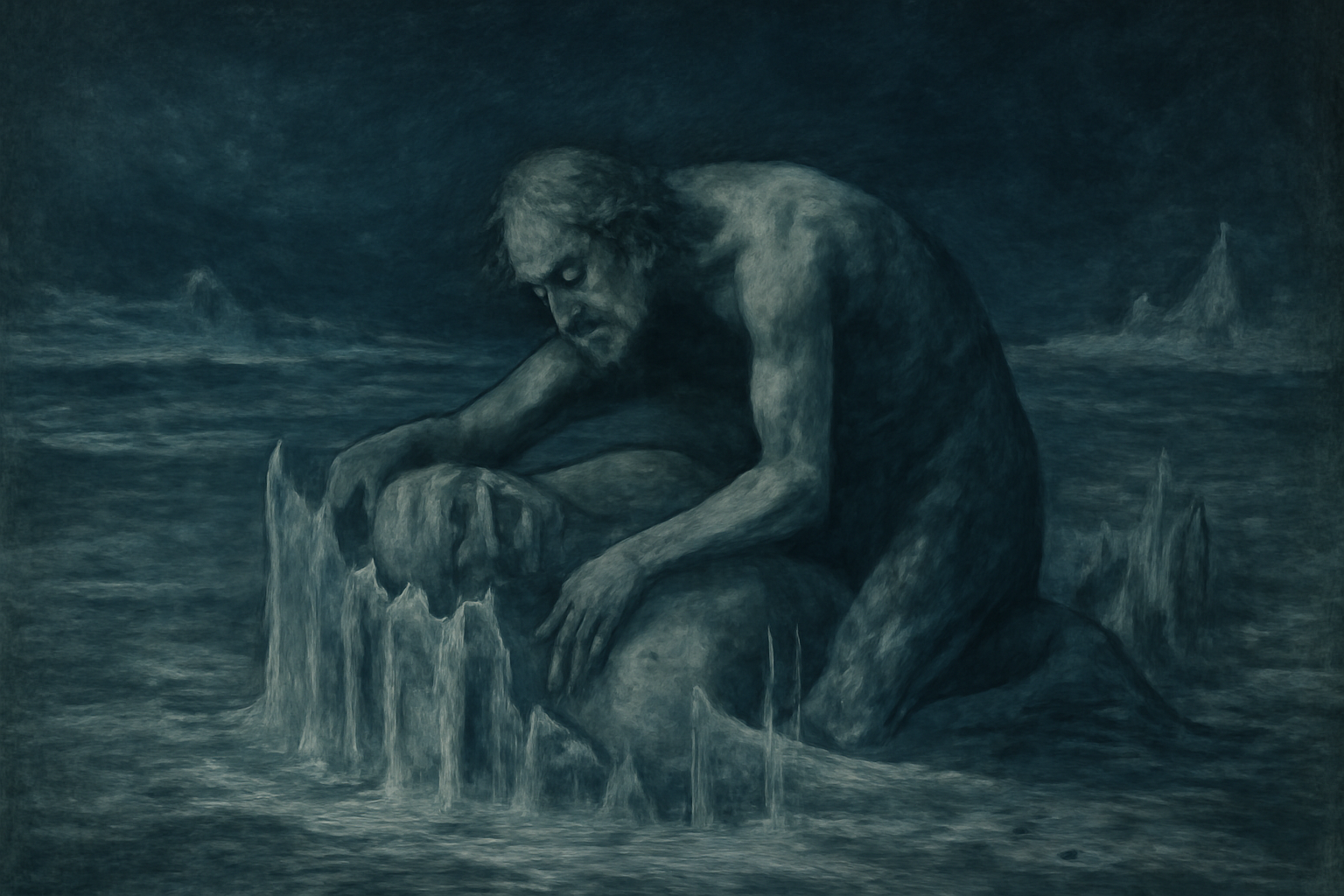
I first read Canto XXXIII of Dante’s Inferno on a winter afternoon. Three weeks later, I was still thinking about it—not in the academic way literature often haunts us, but in the way genuine horror does. Count Ugolino della Gherardesca gnawing the skull of Archbishop Ruggieri is the image that broke something open in me about what Dante’s imagination was capable of.
This is not Dante at his most decorative. This is Dante at his most merciless.
The Frozen Lake and the Condemned
In the Ninth Circle of Hell—Cocytus, the frozen lake of absolute treachery—Dante encounters a shade locked in eternal cannibalism. One figure gnaws relentlessly at another’s skull. The gnawer is Ugolino. The skull belongs to Ruggieri, the archbishop who sealed his doom.
Both men are damned for betrayal. Ugolino, a Pisan nobleman caught in the factional warfare of medieval Italy, had betrayed his own political allies. Ruggieri, however, answered treachery with something far crueler: he locked Ugolino, along with his sons and grandsons, in a tower. Then he threw away the key.
The tower became a tomb. Starvation would be their executioner.
A Father’s Witness
What makes Ugolino’s story unbearable is not merely death—it is the witnessing. He recounts to Dante the slow collapse of his family. His children begged for food. Days passed. Hunger became geometry, dividing the tower into spaces of suffering.
In one devastating moment, his sons offer him their own bodies. “Padre, assai ci fa men dolor la morte”—Father, it would pain us less to die. Take our flesh. Feed yourself.
Ugolino does not take them up on this offer. Or does he? Here lies the textual crux that has tormented scholars for seven centuries.
The Line That Refuses Resolution
After describing the children’s deaths, Ugolino offers this line: “Poscia, piu che ‘l dolor, pote ‘l digiuno.”
Literally: “Then fasting did more than grief had done.” In other words, hunger overcame sorrow as his killer.
But Dante leaves it deliberately ambiguous. Did Ugolino die of starvation? Or does he confess to cannibalism—consuming his children’s corpses after they perished? Translators have fought over this line for centuries, each resolving it differently.
That said, the ambiguity is precisely Dante’s genius. By refusing to clarify, he traps us in Ugolino’s own moral hell. We cannot know. We cannot judge. We can only recoil.
Guilt, Innocence, and Disproportionate Suffering
Here is what torments me most: Ugolino’s guilt does not justify his punishment. Yes, he betrayed his political faction. Yes, he deserves damnation by Dante’s theology.
Yet watching your children starve to death—watching them offer their own flesh—is not a proportionate consequence. Ruggieri’s cruelty transcends the crime. The punishment becomes the crime.
In this, Ugolino becomes pitiable even as he remains damned. Dante allows us to feel horror at both the man and the system that devours him. That complexity is what makes Canto XXXIII so darkly perfect.
Dante understood something essential: the worst hells are those we create through cruelty to the innocent. Ruggieri’s damnation is assured. But Ugolino’s—Ugolino’s haunts us because we cannot quite condemn him, even as we watch him gnaw bone in the frozen dark.
—