
Dante the Pilgrim and Dante the Poet: Why the Distinction Matters
 Lucy Bamboo · October 23, 2026
The character who walks through Hell and the author who put everyone in it are not the same, and the poem keeps showing you the seam.
Lucy Bamboo · October 23, 2026The character who walks through Hell and the author who put everyone in it are not the same, and the poem keeps showing you the seam.
Lucy Bamboo · October 23, 2026The last line of the Inferno, the two letters that carry it, and the rhyme Dante engineers three cantos in advance to land on the same word three times.
Lucy Bamboo · October 23, 2026Francesca’s most famous line, glossed word by word, with the two incompatible readings translators have to choose between.
Lucy Bamboo · October 23, 2026All nine circles of Dante’s Hell in order, anchored to the cantos that describe them, including the two things the usual lists get wrong.
Lucy Bamboo · October 10, 2026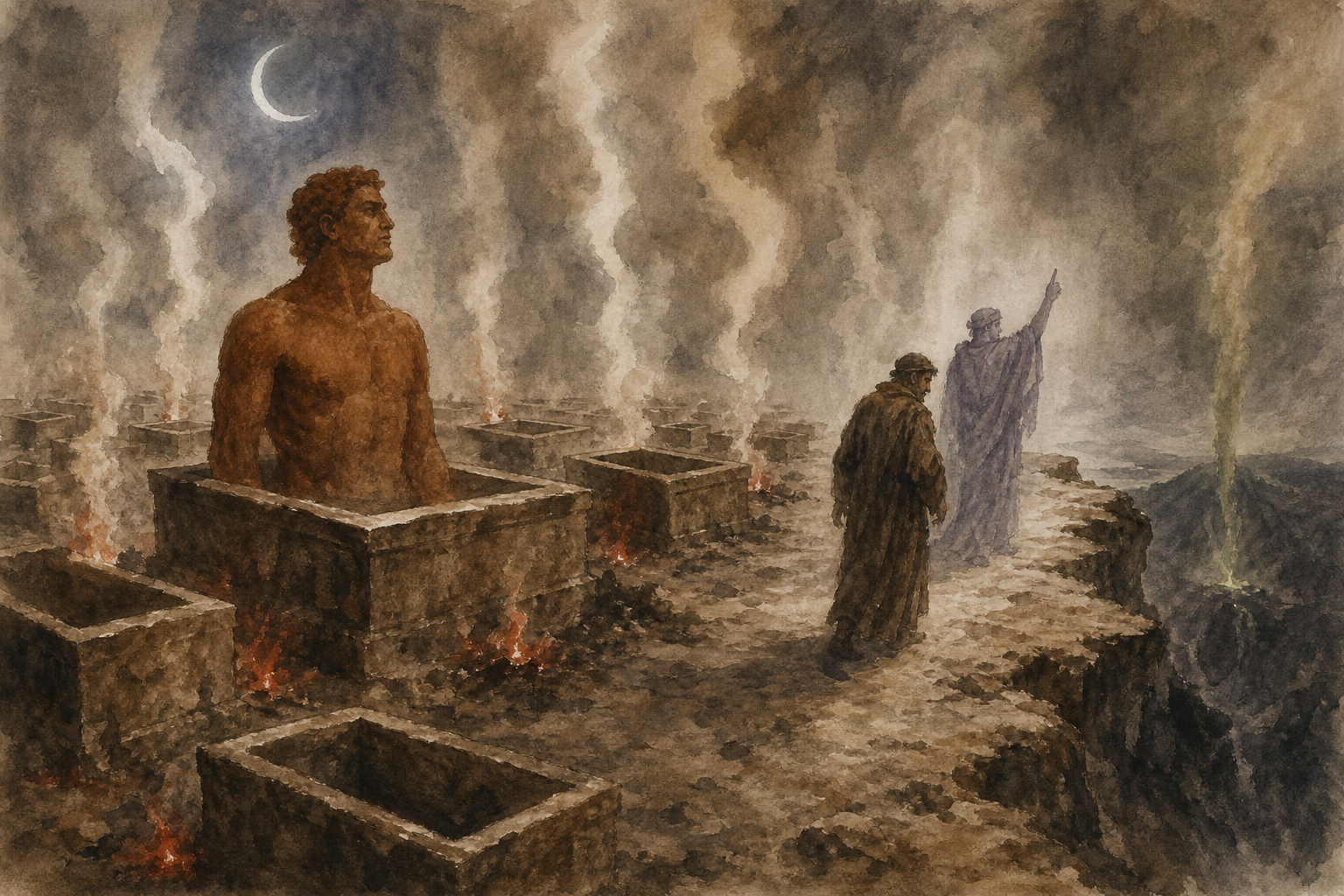
Farinata has not moved while Cavalcante rose and fell beside him, and now he picks up the quarrel exactly where it broke off: the art of returning from exile, he tells Dante, is one the pilgrim will soon learn the weight of; then, after a sigh and a defence of the day he saved Florence, … Read more
Lucy Bamboo · October 10, 2026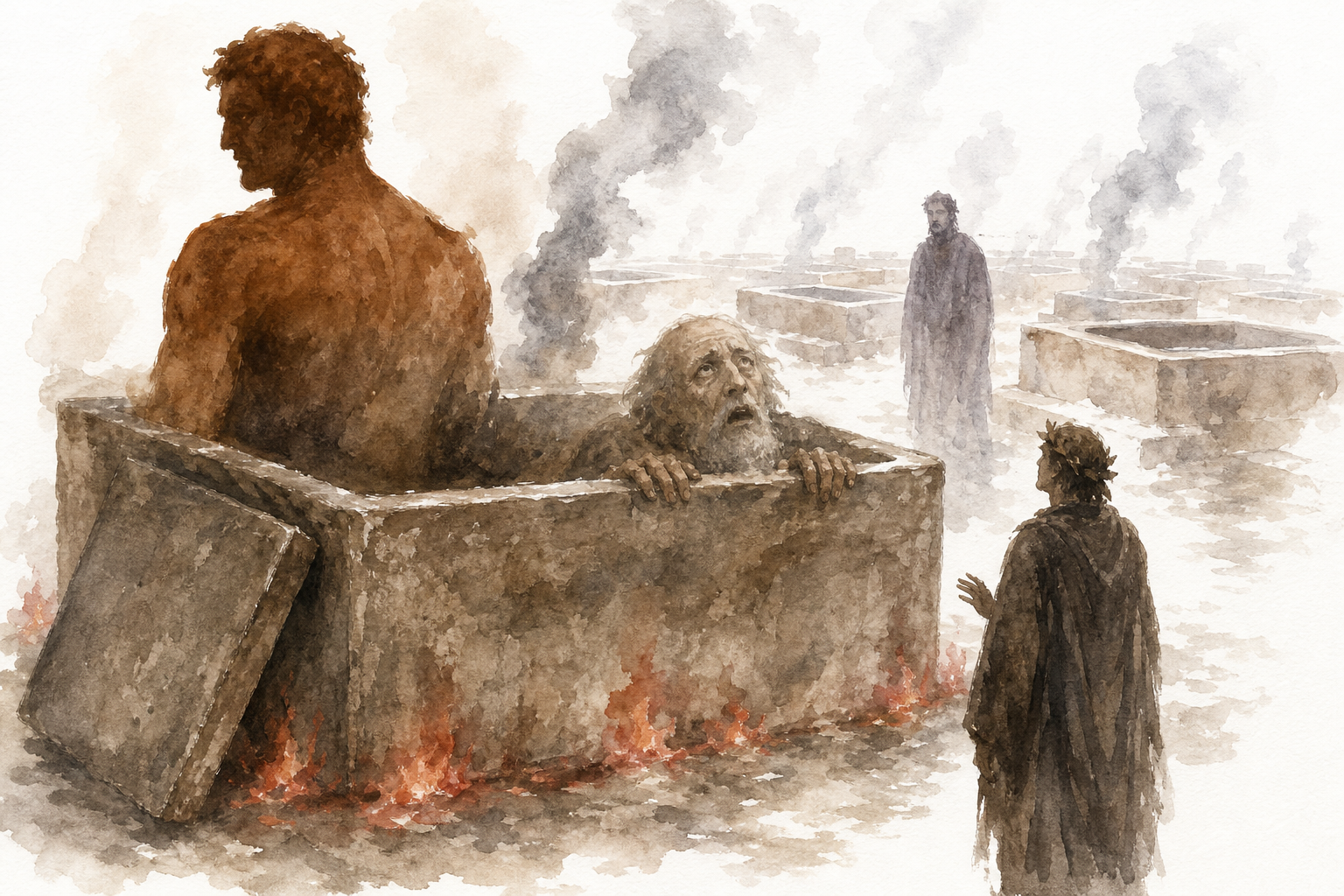
Halfway through Dante’s quarrel with Farinata, a second shade rises from the same open tomb, visible only to the chin, looks past the pilgrim for someone who is not there, and asks in tears where his son is; the son is Guido Cavalcanti, Dante’s closest friend in youth and a poet in his own right, … Read more
Lucy Bamboo · October 10, 2026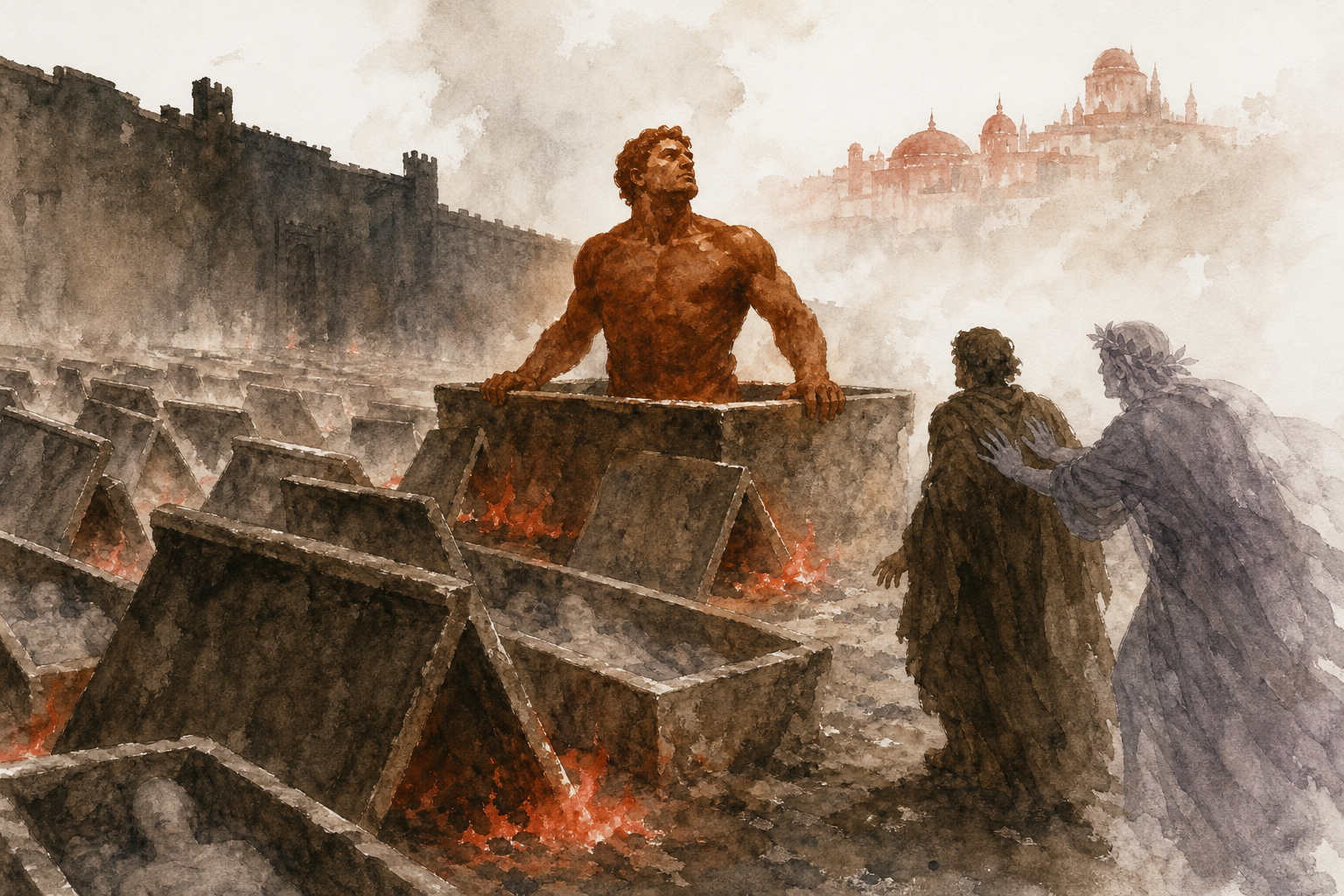
Inside the walls of Dis the travellers take a narrow path between the rampart and the open tombs, and Dante, who has been holding a question since the circle of the gluttons, gets his answer before he can ask it: a voice comes out of a burning sarcophagus, places him by his Florentine accent, and … Read more
Lucy Bamboo · October 10, 2026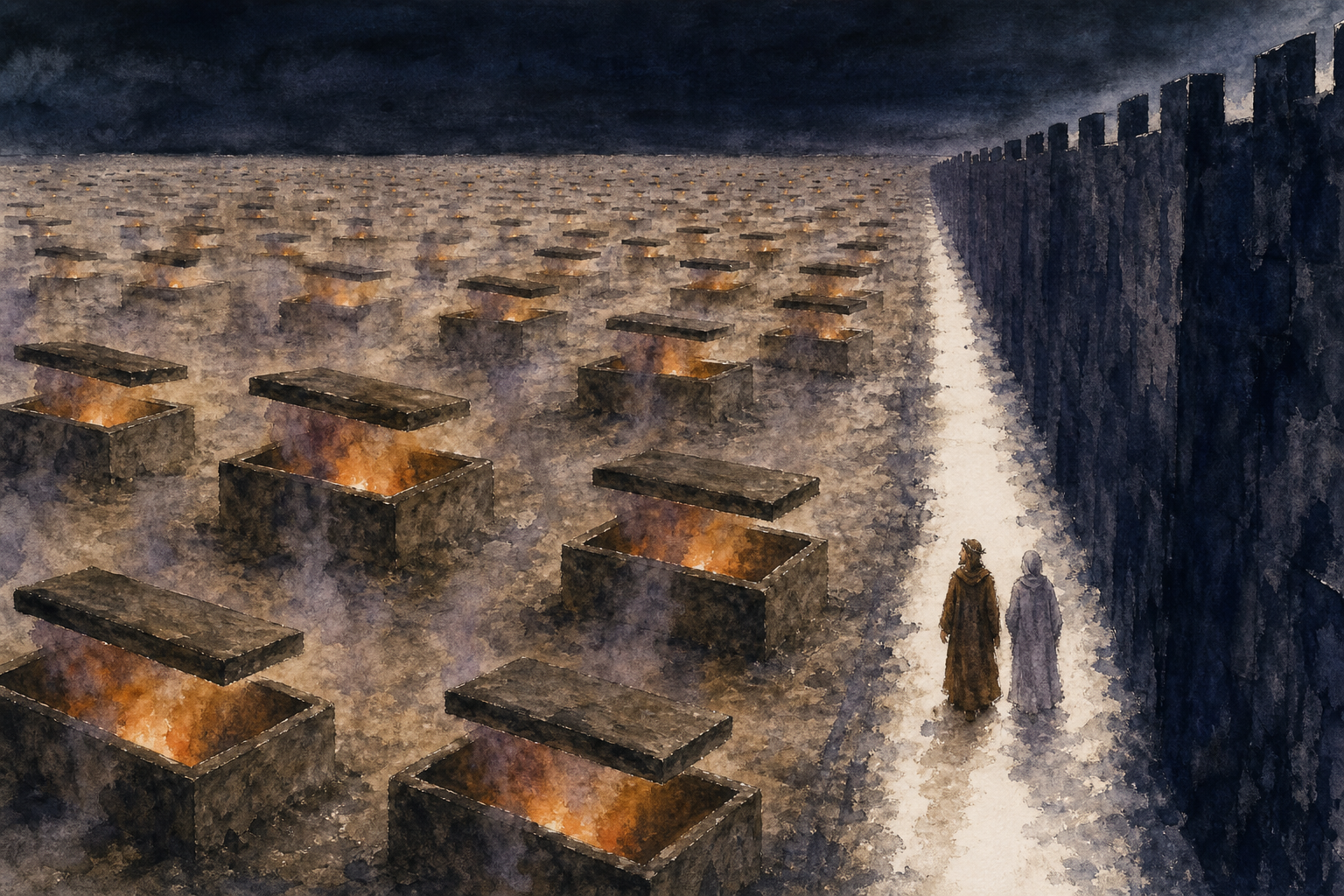
The gate that needed a heavenly messenger to open it now stands wide, and the two travellers walk through without a fight; what is waiting inside the walls of Dis is not a battle but a cemetery — a great plain scored with open stone coffins, laid out like the Roman burial fields at Arles … Read more
Lucy Bamboo · October 10, 2026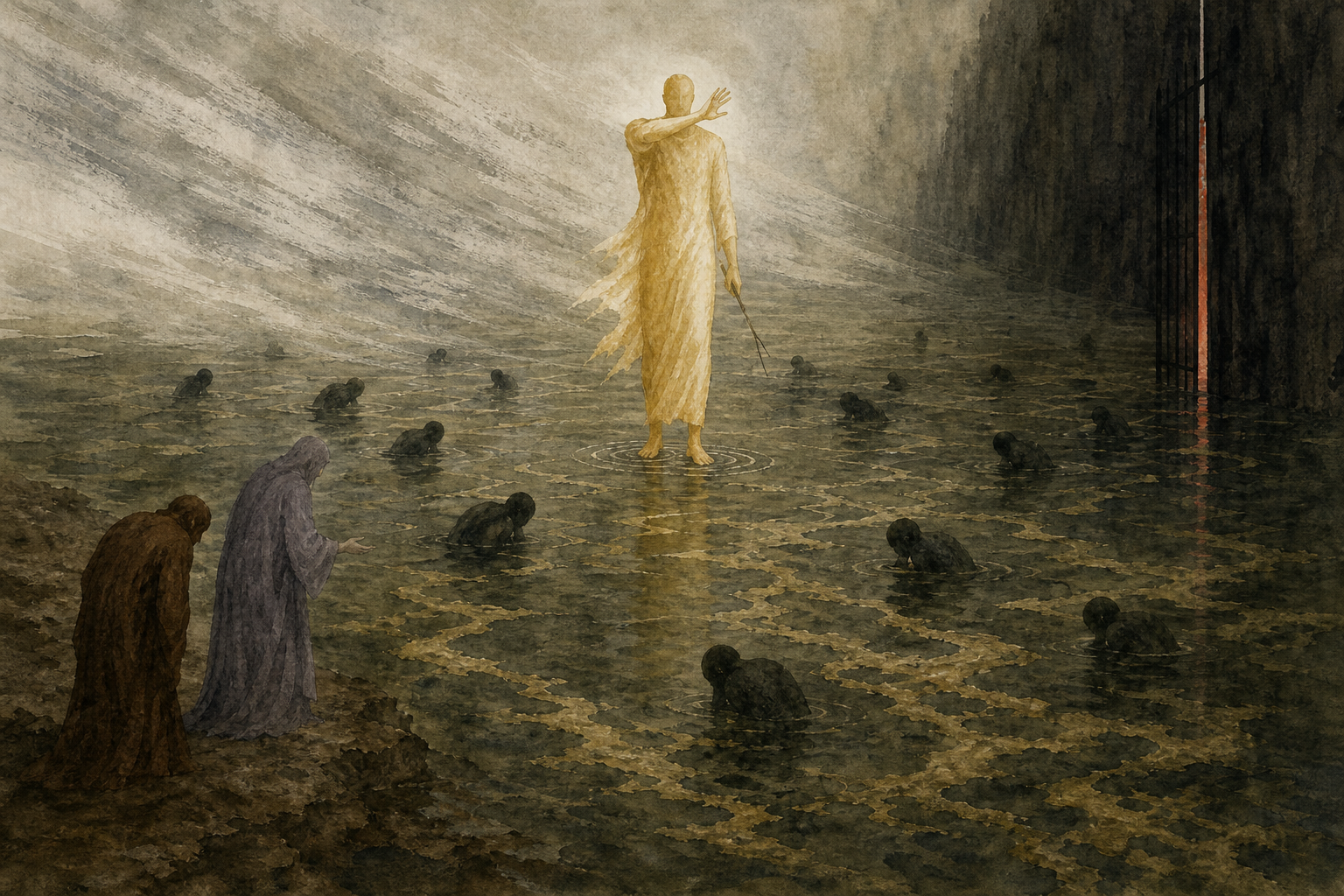
After a canto of stalled threats — a Virgil who cannot open the gate, three Furies calling for Medusa, and a warning to the reader to look under the veil — the rescue finally arrives, and it arrives as weather: a crash of sound over the marsh, both banks shaking, a simile of wind tearing … Read more
Lucy Bamboo · October 10, 2026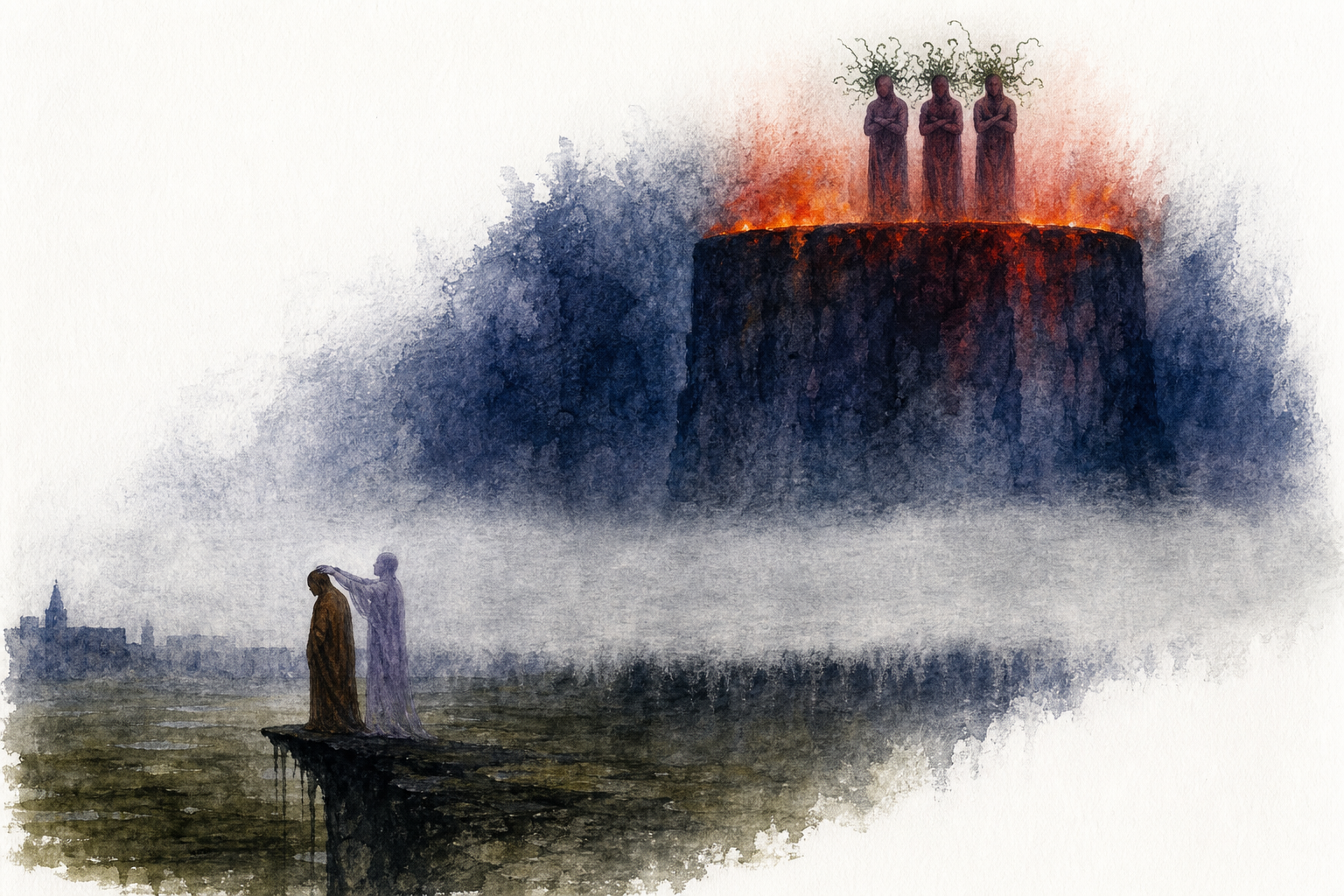
Virgil has just been shut out of a city by devils, and the first thing this canto notices is a colour — cowardice painted on the pilgrim’s face from outside, and then a new colour on Virgil’s, pushed back in faster than it arrived — after which the guide stands listening for a rescue he … Read more