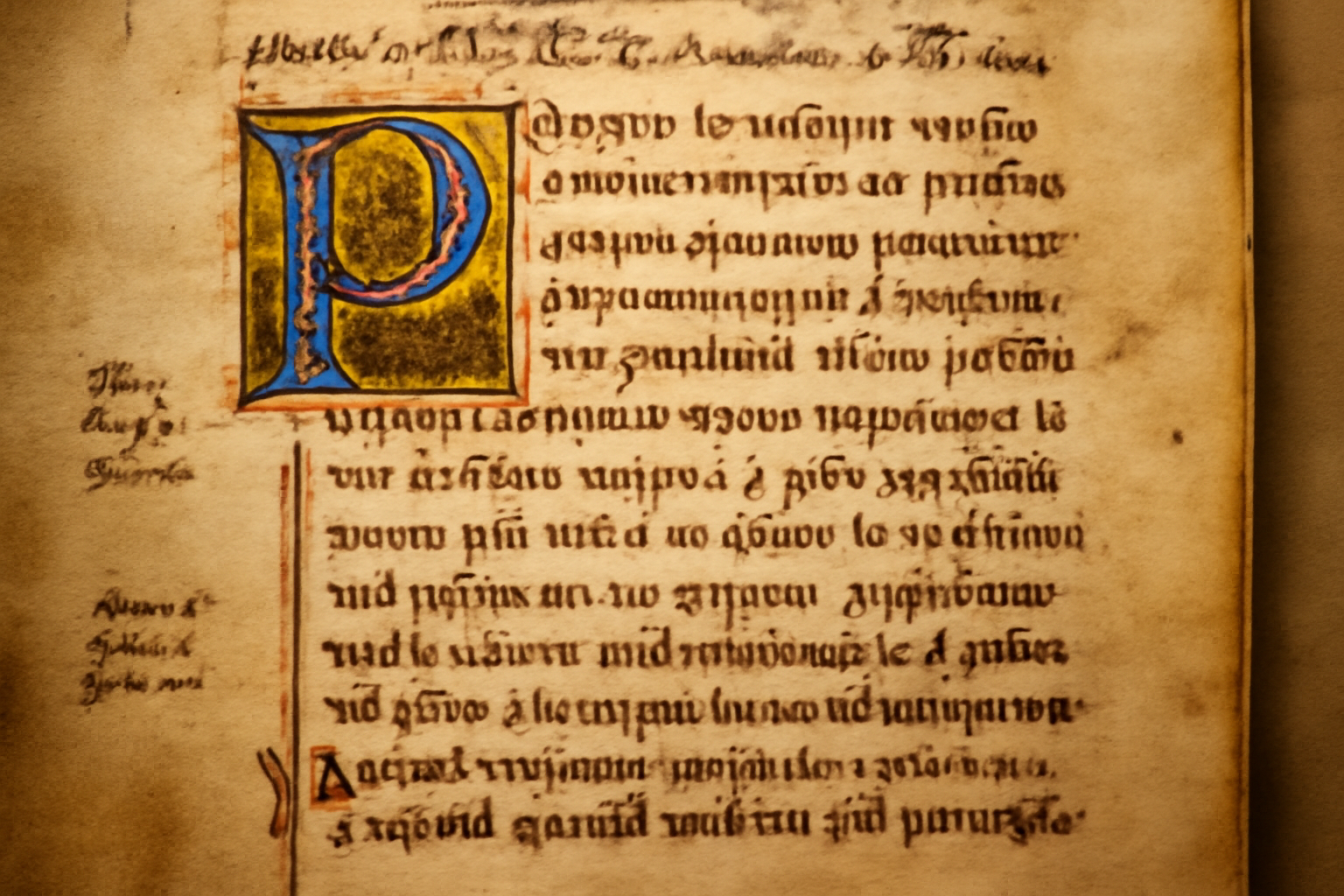
The Gate of Hell Speaks Italian, Not Latin — And That Was Dante\’s Whole Point

Search for the words above Dante’s Gate of Hell and you’ll find people asking for them in Latin. Tattoo forums debate the “correct” Latin phrasing. Quote sites offer up lines like “Omnem spem relinquite, o vos intrantes” as though they were transcribing the original. They aren’t. Dante never wrote a Latin word of it. The … Read more


Nel Mezzo Del Cammin: What Dante’s First Line Really Means And Why Translators Disagree

Nel Mezzo Del Cammin: What Dantes First Line Really Means And Why Translators Disagree

Every Italian schoolchild knows these seven words by heart. They’re the opening of Dante’s Divine Comedy, the most famous line in Italian literature. Yet ask ten translators to render them into English, and you’ll get ten different poems. Nel mezzo del cammin di nostra vita — Dante Alighieri, Inferno, Canto I, Line 1 I’ve spent … Read more

The Ulysses Problem: Canto XXVI and What Gets Lost Between Italian and English

The Ulysses Problem: Canto XXVI and What Gets Lost Between Italian and English

Canto XXVI of Dante’s Inferno is a masterpiece of deliberate ambiguity. Every translation you read pushes you toward a different moral conclusion about the same text. That is not a bug in translation. It’s the feature that makes this canto endlessly alive. Years of returning to this circle of Hell—the Eighth Bolgia, where fraudsters dwell—have … Read more

Farinata degli Uberti: The Heretic Who Refused to Bow

Farinata degli Uberti rising from his tomb in Dantes Inferno Canto X, proud and contemptuous

There are many memorable encounters in the Inferno, but few are as electrically charged as the moment in Canto X when a figure rises from a burning tomb to challenge Dante directly. He doesn’t ask for mercy. No weeping, no begging. He rises chest and brow erect — diritto s’ergea col petto e con la … Read more

Reading the Inferno in Italian Even When You Don’t Speak Italian: A Practical Guide

Reading the Inferno in Italian Even When You Dont Speak Italian: A Practical Guide

You don’t need to be fluent in Italian to read Dante’s Inferno in its original language. You need three things: a facing-page edition, patience, and willingness to sound out unfamiliar words. I started with zero Italian skills. Fifteen years later, I’m still discovering things in the original that English translation can’t capture. This guide is … Read more

Why Dante’s Italian Isn’t Italian: Reading the Commedia in Its Original Medieval Tuscan

Why Dantes Italian Isnt Italian: Reading the Commedia in Its Original Medieval Tuscan

I made a discovery last month that shook my confidence in my Italian reading skills. My university’s facing-page edition of the Divine Comedy had footnotes on nearly every third line. Not historical footnotes. Linguistic ones. Words I didn’t recognize. Grammar that looked wrong. Spellings that seemed like typos. My first thought: had I wasted those … Read more

Longfellow’s Notes Are a Hidden Treasure: The Best Free English-Language Dante Commentary

Longfellows Notes Are a Hidden Treasure: The Best Free English-Language Dante Commentary

Most people know that Henry Wadsworth Longfellow translated Dante. Far fewer realize that his notes are arguably more valuable than the translation itself—and they’re completely free. I discovered this by accident. While hunting for a modern Dante edition, I stumbled onto Project Gutenberg. There I found Longfellow’s 1867 Divine Comedy with full scholarly apparatus. What … Read more

Why Every English Translation of Dante’s Inferno Reads Like a Different Poem

Why Every English Translation of Dantes Inferno Reads Like a Different Poem

I own thirteen English translations of Dante’s Inferno. Thirteen. Some sit gathering dust on my shelf. Others I’ve marked up so heavily they barely close. But here’s the strange thing: if I hand you Longfellow’s version and then Ciardi’s, you’d think they translated different poems entirely. The opening canto reads like a funeral dirge in … Read more

The Gate of Hell in Six Translations: How One Inscription Becomes Six Different Warnings

The Gate of Hell in Six Translations: How One Inscription Becomes Six Different Warnings

I spent an entire weekend last fall comparing twelve different English translations of nine Italian lines. Nine lines — the Gate of Hell inscription from Dante’s Inferno, Canto III. By Sunday night my desk had disappeared under paperbacks, and the nine lines had become twelve different gates. Each translator made choices that altered Hell’s entrance. … Read more

Free Dante: Open-Access Resources Every Serious Reader Should Bookmark

Free Dante: Open-Access Resources Every Serious Reader Should Bookmark

You don’t need a university library card to study Dante seriously. The resources available for free online are extraordinary—and they’re only getting better. I spent years assuming rigorous Dante scholarship required expensive institutional access. Then I discovered how much is genuinely available to anyone with an internet connection. What follows is the resource guide I … Read more