I made a discovery last month that shook my confidence in my Italian reading skills. My university’s facing-page edition of the Divine Comedy had footnotes on nearly every third line. Not historical footnotes. Linguistic ones. Words I didn’t recognize. Grammar that looked wrong. Spellings that seemed like typos.
My first thought: had I wasted those Italian classes?
My second thought: no. Dante didn’t write in modern Italian. He wrote in medieval Tuscan—a language that hasn’t been spoken for seven centuries. Even native Italian speakers need those footnotes. Reading Dante is like an English speaker tackling Chaucer: you recognize the language. But you also need help.
Medieval Tuscan Isn’t Italian—It’s Something Older
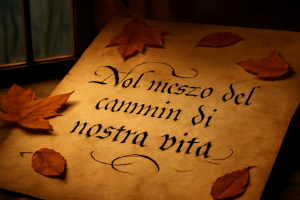
When Dante sat down to write around 1308, “the Italian language” did not exist. This is crucial. No single Italian existed across the peninsula. Instead, Italy was a mosaic of mutually unintelligible dialects.
Venetian sounded nothing like Neapolitan. Sicilian bore little resemblance to Lombard. A merchant from Milan couldn’t understand a shepherd from Rome without serious effort. These weren’t regional accents. They were different languages.
Into this fragmented world, Dante chose something radical. He would write his masterpiece not in Latin—the language of the Church, the law, the learned—but in his native Florentine Tuscan. Not raw Florentine street dialect, mind you. He deliberately elevated it, mixing in vocabulary from other regions, stretching the language upward to match his artistic ambitions.
He called this invention the “volgare illustre”—the illustrious vernacular. The elevated language of the people.
Why This Choice Was Revolutionary
Dante didn’t just choose a dialect. He chose to argue for it.
Before the Divine Comedy, he wrote a treatise called De vulgari eloquentia (On Eloquence in the Vernacular). In it, he made a stunning claim: the spoken languages of ordinary people could be vehicles for great literature. They were worthy. They were powerful. They deserved poets as gifted as any writing Latin.
This wasn’t obvious in 1305. Latin had dominated European intellectual life for over a thousand years. To argue otherwise took courage—and genius. Dante didn’t just write in the vernacular. He proved it could achieve unprecedented artistic heights.
What happened next changed everything. Dante’s choice didn’t merely create a masterpiece. It created a language. Modern standard Italian descends primarily from Dante’s (and Petrarch’s and Boccaccio’s) Tuscan. When Italy unified in the 19th century, Dante’s medieval Tuscan became the foundation for the nation’s official language.
He didn’t write in Italian. He invented it.
What Medieval Tuscan Actually Looks Like
Let me show you why footnotes are necessary. Here are some concrete differences between Dante’s language and modern Italian.
Spelling Shifts
Dante wrote “ogne.” We write “ogni” (every). He wrote “etterno.” We write “eterno” (eternal). These weren’t accidents. Tuscan spelling conventions were fluid in the 14th century. They standardized later.
More striking: Dante frequently wrote “ne la” or “ne lo” where we now write “nella” or “nello” (in the). On the page, it looks fragmented. To modern eyes, it seems wrong. But in his time, the fusion hadn’t hardened yet. The language was still plastic.
Archaic Words That Vanished
Dante uses “dismisura” for excess or boundlessness. Modern Italian abandoned this word. We use “dismisura” only in poetry now—when quoting Dante, usually.
He conjugates verbs differently. Where modern Italian says “può” (can, third person singular), Dante writes “puote.” The form is archaic now, almost extinct. Same with “fue” for “fu” (was). These weren’t errors in Dante’s time. They were standard.
Words That Changed Meaning
This is trickier—and more interesting. Dante’s “virtute” is broader than modern “virtù.” For him, it meant excellence, strength, power, moral excellence. Modern Italian narrowed it to moral virtue specifically. Context matters, but the semantic drift is real.
Similarly, “gentile” carried more weight in medieval Tuscan. It meant noble, of high birth, elevated in spirit. In modern Italian, it simply means kind or polite. An entire aristocratic resonance got flattened.
When you read Dante in modern Italian, you lose these shadings. Translations try to recover them. But some nuance always escapes.
The Manuscript Problem: We Don’t Actually Have an Original
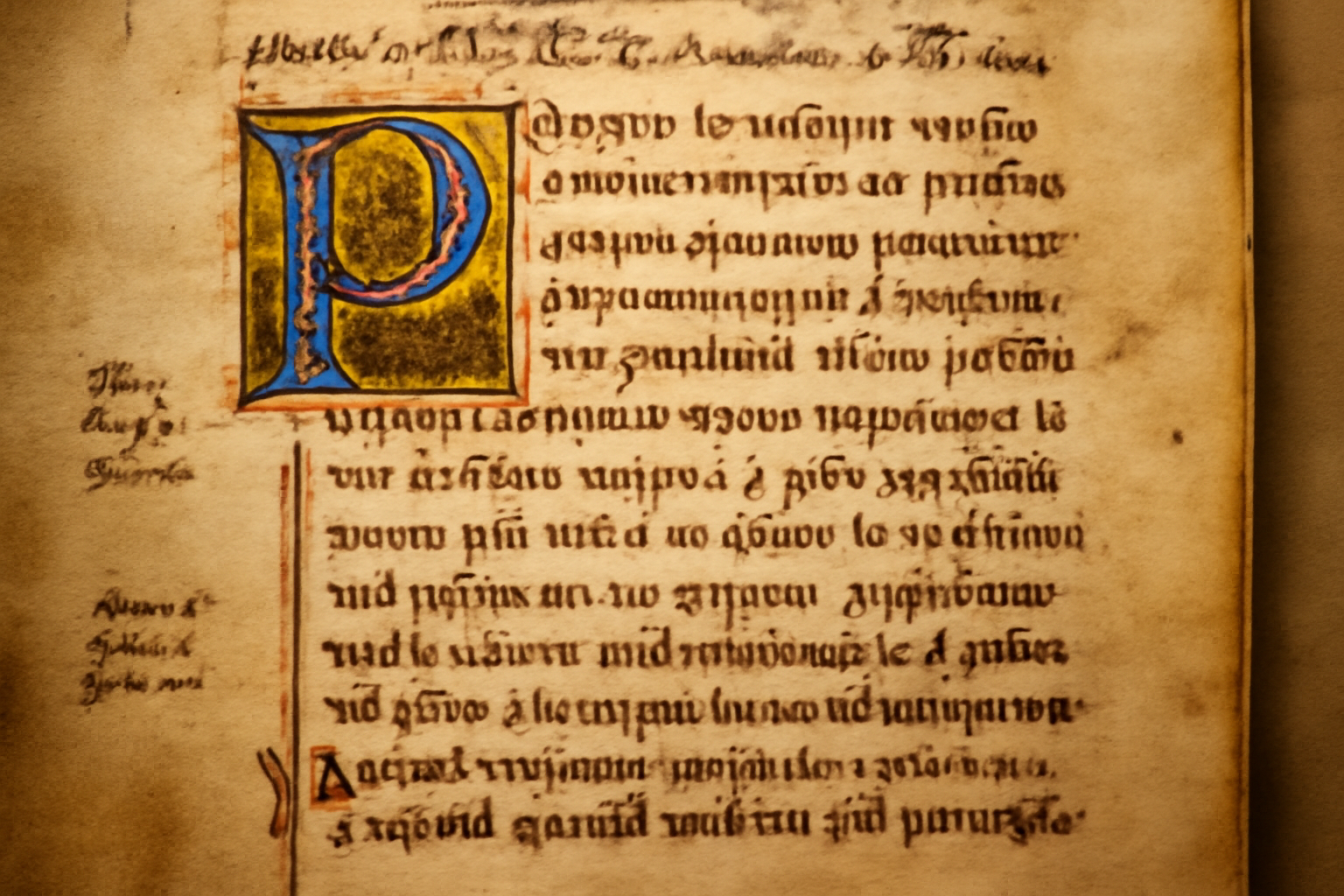
Here’s a complication most readers don’t know about. There is no manuscript in Dante’s own hand. None survives. What we have are copies of copies, made decades or centuries after he died in 1321.
Medieval scribes made choices. They “corrected” what seemed like errors. They standardized spelling. They occasionally rewrote passages they found confusing. Each copy introduced tiny variations.
Scholars comparing manuscripts found substantial disagreements. Which version is “true”? Did Dante write this word or that? Modern editors reconstruct what they believe is closest to the original. But they disagree—sometimes significantly.
This creates a hidden layer of interpretation. Before you even get to English translation, there’s disagreement about what the medieval Tuscan actually says. The footnotes in your facing-page edition? Some point out manuscript variants. Editors want you to know: this line is contested.
Seven Centuries of Commentators Can’t Be Wrong
Starting in the 1320s—just years after Dante’s death—scholars began annotating the Divine Comedy. They wrote commentaries explaining difficult passages. They defined archaic words and clarified obscure references.
This tradition never stopped. Dante commentary is older than the printing press. By the Renaissance, editions of Dante came thick with scholarly apparatus. Modern Italian editions continue this practice—because modern Italian speakers need it.
When you buy a contemporary Italian edition, you get extensive footnotes. For words Dante used that modern Italian abandoned. For grammar that modern Italian changed. For references to medieval Florence that contemporary readers wouldn’t grasp. This isn’t a failure of modern readers. It’s the inevitable result of seven hundred years passing.
Language evolves. Dante’s Tuscan evolved into modern Italian. Reading him now means reading across that evolution.
What This Means for English Readers
If you’re reading Dante in English, you’re experiencing a double translation. First, editors translate medieval Tuscan into modern Italian—implicitly, through their choices about what the text says. That modern understanding then passes into English.
Some meanings survive both jumps intact. Others don’t.
Consider how translators handle “ogne.” They can’t write “ogne” in English—it’s meaningless. They write “every.” But “every” in English doesn’t capture the slightly archaic quality of Dante’s spelling. It’s just a word. The temporal shimmer is lost.
Or take “virtute.” Translators must choose: do they say virtue (the modern sense)? Excellence? Power? Strength? Each choice locks in an interpretation. Dante left it open. Medieval Tuscan was spacious enough to hold multiple meanings simultaneously. Modern languages—including English—often force us to choose.
Good translations acknowledge this. They might use different English words at different moments, trying to triangulate toward Dante’s broader meaning. The best translators read him like scholars read Chaucer: with historical awareness. With appreciation for linguistic difference. With respect for the distance between then and now.
The Radical Act of Literary Creation
Here’s what struck me when I understood all this: Dante didn’t write in a foreign language. He wrote in a language that didn’t exist yet, and he willed it into being through sheer artistic power.
That’s extraordinary. Not just as an achievement. As an act of creation.
He took medieval Florentine Tuscan—a local dialect, spoken by merchants and artisans, dismissed by the learned—and elevated it so magnificently. It became the foundation for an entire nation’s language. Seven centuries later, we’re still reading him. Still needing footnotes. Still discovering new meanings in medieval Tuscan.
When I opened that facing-page edition and saw those footnotes, I wasn’t experiencing failure. I was experiencing history. Seven hundred years of it. The distance between Dante’s world and mine, made visible on the page.
And in that distance, something remarkable: a language still alive, still speaking, still strange and familiar at once. That’s Dante’s real miracle. Not that he wrote the greatest poem in European history. But that he created the language to do it—and that we can still read him, footnotes and all.
About This Article

Written by Lucy Bamboo. Lucy Bamboo has been reading the Divine Comedy for fifteen years — first in translation, then stubbornly in Medieval Tuscan with a dictionary and far too many footnotes. Reading Dante is her scene-by-scene walk through the poem: the original Italian, seven centuries of scholarly argument presented as argument rather than answer, and the human questions sitting underneath the theology. More about this site.
Verify this against a primary source
Specifics change, and your situation may differ from the one described here. These are the authorities worth checking directly:
- Digital Dante, Columbia University — text, commentary and translation apparatus
- Princeton Dante Project — the Commedia with historical commentary
- Dartmouth Dante Project — searchable commentary from 1322 onward