Dante Alighieri had a lot of enemies. But none burned hotter than Pope Boniface VIII.
The pontiff ruled from 1294 to 1303—precisely when Dante’s life came apart. In 1302, Boniface backed the Black Guelphs, the political faction that exiled the poet from Florence. Dante never returned home. That wound never healed. But the personal betrayal only scratches the surface of why Boniface dominates the Commedia like few other figures. For Dante, this pope represented something far worse than political enemies: the corruption of the Church itself.
A Prophecy Written in Stone
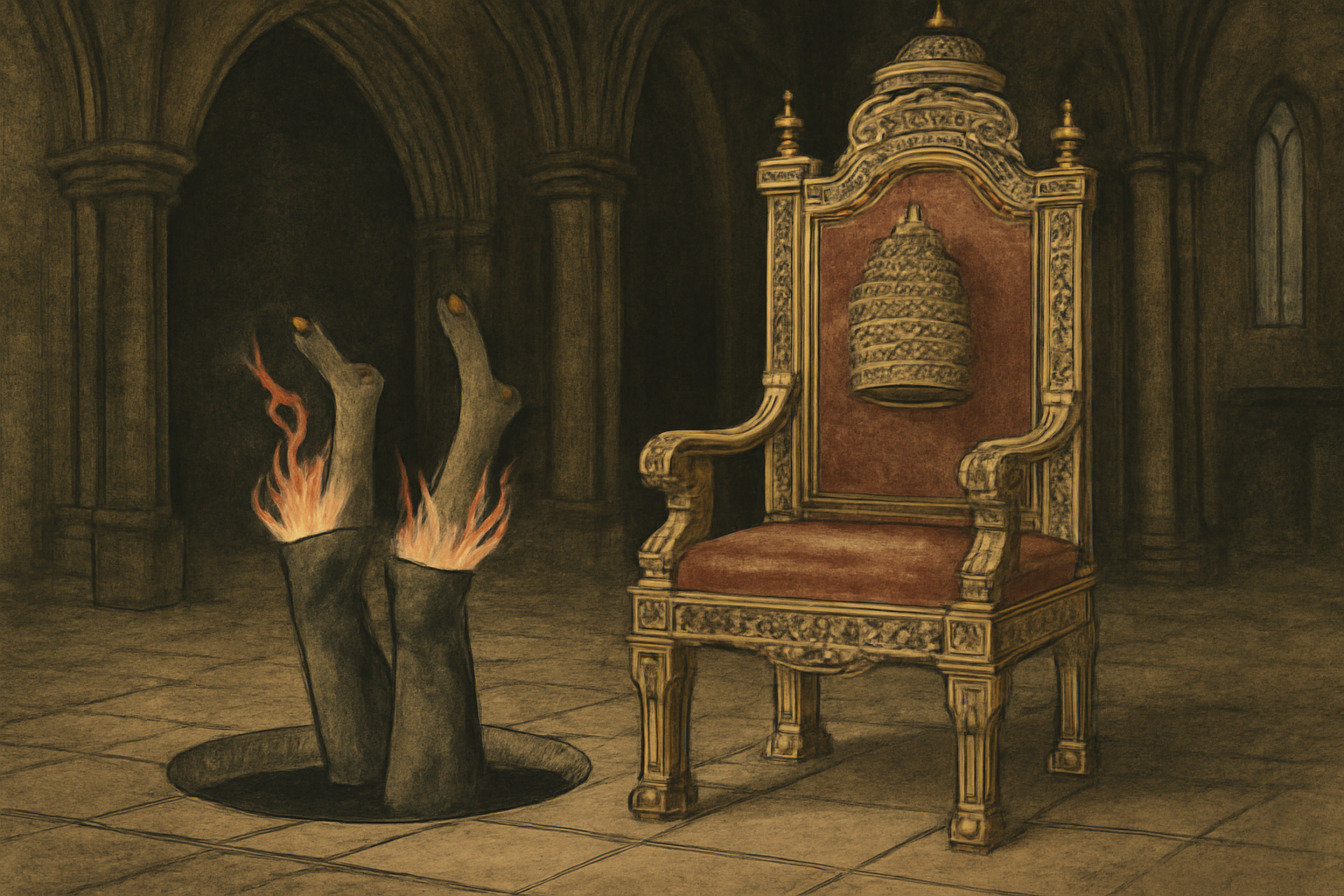
In Canto XIX of the Inferno, Dante places the simoniac popes headfirst in burning holes. Pope Nicholas III mistakes Dante for someone else—for Boniface VIII. Why? Because a reserved slot awaits Boniface in Hell. The prophecy is extraordinary: Dante condemns a living pope to damnation before he even dies.
This wasn’t mere fantasy or wishful thinking. For Dante, it was poetic justice. Nicholas III says of Boniface: “Unless I am deceived, I see him already coming.” The slot is literally waiting. Dante had the audacity to sentence his enemy while the pope still drew breath. That’s not rage—that’s prophetic rage, sanctified by art.
Temporal Power, Spiritual Ruin
What was Boniface’s actual crime? He used spiritual authority for political gain. His reach extended into Florentine affairs. He grabbed temporal power alongside his sacred office. For Dante, this violated the natural order of the universe.
In De Monarchia, Dante’s political treatise, he argues plainly: the pope rules souls; the emperor rules earthly affairs. These powers must remain separate. When a pope seizes both, he corrupts both. Boniface embodied this fatal confusion. He wielded the Church’s spiritual authority as a weapon in worldly politics.
Behind this abuse lay a document Dante traced to the root of all Church corruption: the Donation of Constantine. This forged deed supposedly granted temporal dominion to the papacy. Dante saw it as the original sin of the medieval Church. Boniface simply took that corruption to its logical, damning extreme.
Not Anti-Papal, But Unforgiving
Here’s what matters: Dante wasn’t against the papacy itself. He believed in the institution completely. His rage targeted corrupt individuals who betrayed their divine mission. Several popes suffer in the Commedia—Celestine V (arguably), Clement V (by prophecy), and others.
Yet Boniface stands apart. Dante returns to him more than to almost any other historical figure in the poem. Dante’s obsession reveals something essential: personal betrayal fused with theological conviction. Boniface didn’t just wrong Dante the exile. He wronged Christendom itself.
Understanding Dante’s grudge against Boniface VIII unlocks the Commedia. It explains why salvation and damnation matter so viscerally. Dante doesn’t merely describe Hell—he populates it with his enemies. He does so with the certainty of a man who believes God agrees.
About This Article

Written by Lucy Bamboo. Lucy Bamboo has been reading the Divine Comedy for fifteen years — first in translation, then stubbornly in Medieval Tuscan with a dictionary and far too many footnotes. Reading Dante is her scene-by-scene walk through the poem: the original Italian, seven centuries of scholarly argument presented as argument rather than answer, and the human questions sitting underneath the theology. More about this site.
Verify this against a primary source
Specifics change, and your situation may differ from the one described here. These are the authorities worth checking directly:
- Digital Dante, Columbia University — text, commentary and translation apparatus
- Princeton Dante Project — the Commedia with historical commentary
- Dartmouth Dante Project — searchable commentary from 1322 onward