I spent months reading Paradiso without understanding where the poem was actually going. Canto after canto of Dante ascending through spheres of light, meeting saints and theologians—it felt magnificent, but untethered. Then I grasped the Beatific Vision, and everything clicked. The entire Divine Comedy, all three canticles, exists as a single arrow pointing toward this one moment: standing face-to-face with God.
What Is the Beatific Vision?
In Catholic theology—especially as Thomas Aquinas articulated it—the Beatific Vision is not a place. It’s an experience: the direct, unmediated sight of God’s essence. Not a vision of God filtered through metaphor or symbol, but God as God truly is.
For the saved, this Vision is the ultimate reward. Not heaven as a location, but as communion. Perfect knowledge. Perfect love. The soul seeing reality as it actually is, stripped of all illusion. This is what the saved spend eternity doing.
Dante didn’t invent this concept. He inherited it from medieval theology. But he made it the architectural foundation of his entire poem. Every circle of Hell, every terrace of Purgatory—they exist in relation to this single endpoint.
The Architecture of Desire
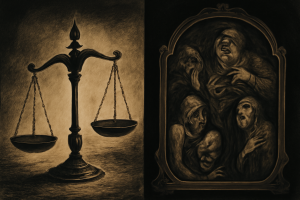
This realization transformed how I read the earlier canticles. In Inferno, the punishments aren’t random cruelties. They’re expressions of distance from the Vision. Sinners are trapped in darkness, in lies, in fragmentation—precisely because they’ve turned away from the face of God.
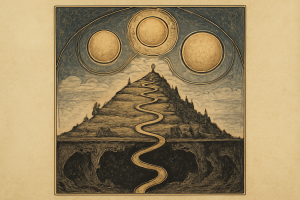
Purgatory, in contrast, becomes a staircase of approach. Each terrace purges a particular distortion—pride, envy, wrath. With each step, the soul moves closer to clarity, to union, to seeing. The geography is theological.
Understanding this changed my reading completely. I wasn’t following a narrative. I was following a theology in motion.
The Impossible Moment: Canto XXXIII
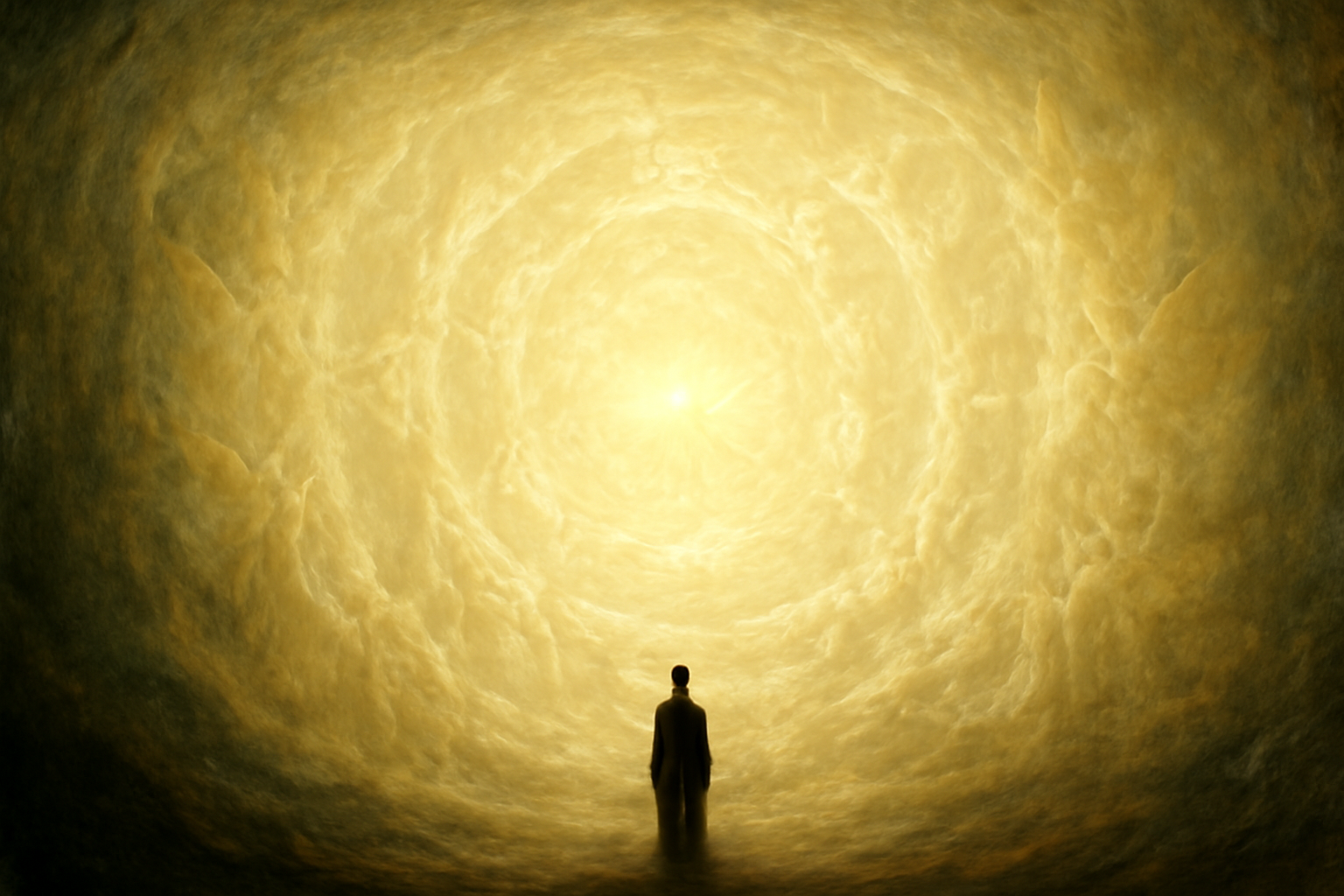
Dante finally achieves the Vision in the final canto. He sees three interlocking circles of light—the Trinity. Within one circle, the image of a human face appears. Christ. The Incarnation.
Then something extraordinary happens: Dante admits he cannot describe it. His intellect reaches the limit. Language collapses. All the poet’s skill, the entire machinery of metaphor and narrative, becomes inadequate.
For translators, this is a nightmare. How do you render something the author claims is beyond language? Robert Pinsky, Mary Jo Bang, W.S. Merwin—each grapples with this impossible task differently. Yet somehow, Dante’s very failure to describe it becomes proof of what he’s witnessed.
The Final Line
The poem concludes with one of literature’s most perfect moments. After the Vision, after the silence, Dante writes:
“l’amor che move il sole e l’altre stelle”
“The love that moves the sun and the other stars.”
The poem doesn’t end with description or explanation. It ends with motion—with love as the force animating all creation. That word “stelle” (stars) echoes the final words of Inferno and Purgatorio too. The three canticles are unified by this image of celestial order, of love as gravity.
Dante has seen God. Words fail. All that remains is to name the force that holds everything together: love itself.