
By Lucy Bamboo
Why does Dante place some souls in Paradise and others in Hell? The answer hinges on a medieval theological puzzle: How do grace and free will coexist? This tension shapes the poem’s architecture and defines who gets saved.
The Problem Dante Inherited
Dante follows Thomas Aquinas, the greatest medieval theologian. Aquinas insisted humans possess genuine free will. We aren’t puppets. Our choices matter. Sin is always a choice—which means Hell’s punishments are just.
However, Aquinas also taught that free will alone cannot save us. We need divine grace. Reason can identify sin and guide us toward virtue. Yet without God’s supernatural gift of grace, we cannot turn toward salvation.
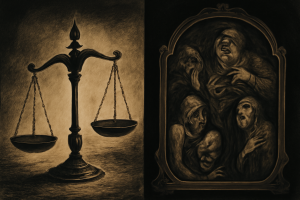
Here lies the tension: If I freely choose sin, I’m justly condemned. But if I need grace to choose good, do I truly choose freely? Dante never resolves this paradox. Instead, he dramatizes it across the Commedia.
Guides as Theology in Motion
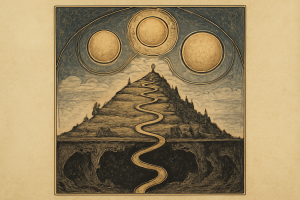
Dante’s three guides embody this theological puzzle. Virgil represents human reason—magnificent but limited. He navigates Hell and Purgatory brilliantly and teaches us consequences by mapping sin’s landscape.
Yet Virgil stops at Purgatory’s summit. Paradise lies beyond his reach. Medieval theology taught that virtuous pagans, no matter how excellent, remain trapped in Limbo without baptism and faith. Reason without grace falls short.
Beatrice then assumes the guide’s role, embodying divine grace and theology—revelation itself. This shift is not poetic ornament but theological necessity. Only grace can lead us to God.
The Case of the Virtuous Pagan
Dante’s treatment of virtuous pagans troubled medieval readers. Great souls like Aristotle and Homer dwell in Limbo—not tormented, but separated from God’s presence. They exercised free will nobly, yet lacked grace.
The most shocking exception: Ripheus the Trojan. This pagan warrior appears in Paradise’s highest sphere, scandalizing medieval commentators. How could a pre-Christian soul reach Heaven?
Dante’s answer is audacious: God granted Ripheus grace secretly. Divine mercy operates beyond institutional channels and chooses whom it will. This preserves both free will—Ripheus’s virtue was genuine—and grace’s absolute necessity.
About This Article

Written by Lucy Bamboo. Lucy Bamboo has been reading the Divine Comedy for fifteen years — first in translation, then stubbornly in Medieval Tuscan with a dictionary and far too many footnotes. Reading Dante is her scene-by-scene walk through the poem: the original Italian, seven centuries of scholarly argument presented as argument rather than answer, and the human questions sitting underneath the theology. More about this site.
Verify this against a primary source
Specifics change, and your situation may differ from the one described here. These are the authorities worth checking directly:
- Digital Dante, Columbia University — text, commentary and translation apparatus
- Princeton Dante Project — the Commedia with historical commentary
- Dartmouth Dante Project — searchable commentary from 1322 onward