Dante’s Divine Comedy isn’t just poetry—it’s a cosmic blueprint. His afterlife has geography, physics, and logic. Understanding the map unlocks the theology.
Think of it this way: distance from God measures everything. Where you are tells you who you are.
Hell: A Funnel to Nowhere
Hell is a vast cone boring downward through Earth’s crust to its center. It exists because Lucifer fell there—his impact carved the pit.
The structure follows a single rule: deeper = worse sin = further from God. Limbo sits near the top. Betrayal occupies the frozen core with Satan himself.
This isn’t arbitrary. Medieval theology taught that sin is a turning away from God. Dante made that abstract idea literal—a physical descent into separation.
Limbo: The Ache of Absence
Here’s where most readers stumble. Limbo isn’t a torture chamber. No flames, no demons, no pain.
Instead, virtuous pagans and unbaptized infants experience something crueler: eternal longing. They lived well and reasoned beautifully. Yet they never reached God—and never will.
Your guide Virgil lives here. He’s wise, noble, and trapped. He can help you climb to Heaven but cannot enter it himself. That’s his tragedy—and Dante’s theological point: virtue without grace is incomplete.
The Harrowing: A One-Time Exception
After Christ’s Crucifixion, something extraordinary happened. Christ descended into Limbo and liberated the Old Testament patriarchs—Adam, Moses, Abraham, and others.
Virgil witnessed this rescue. He saw the gates of Limbo break open. However, Christ extended this mercy only once. No further souls escape. Ever.
Why mention it? Because it shows grace operating outside normal law. It also emphasizes Virgil’s isolation. He watched salvation arrive and pass him by.
Purgatory: Suffering With Hope
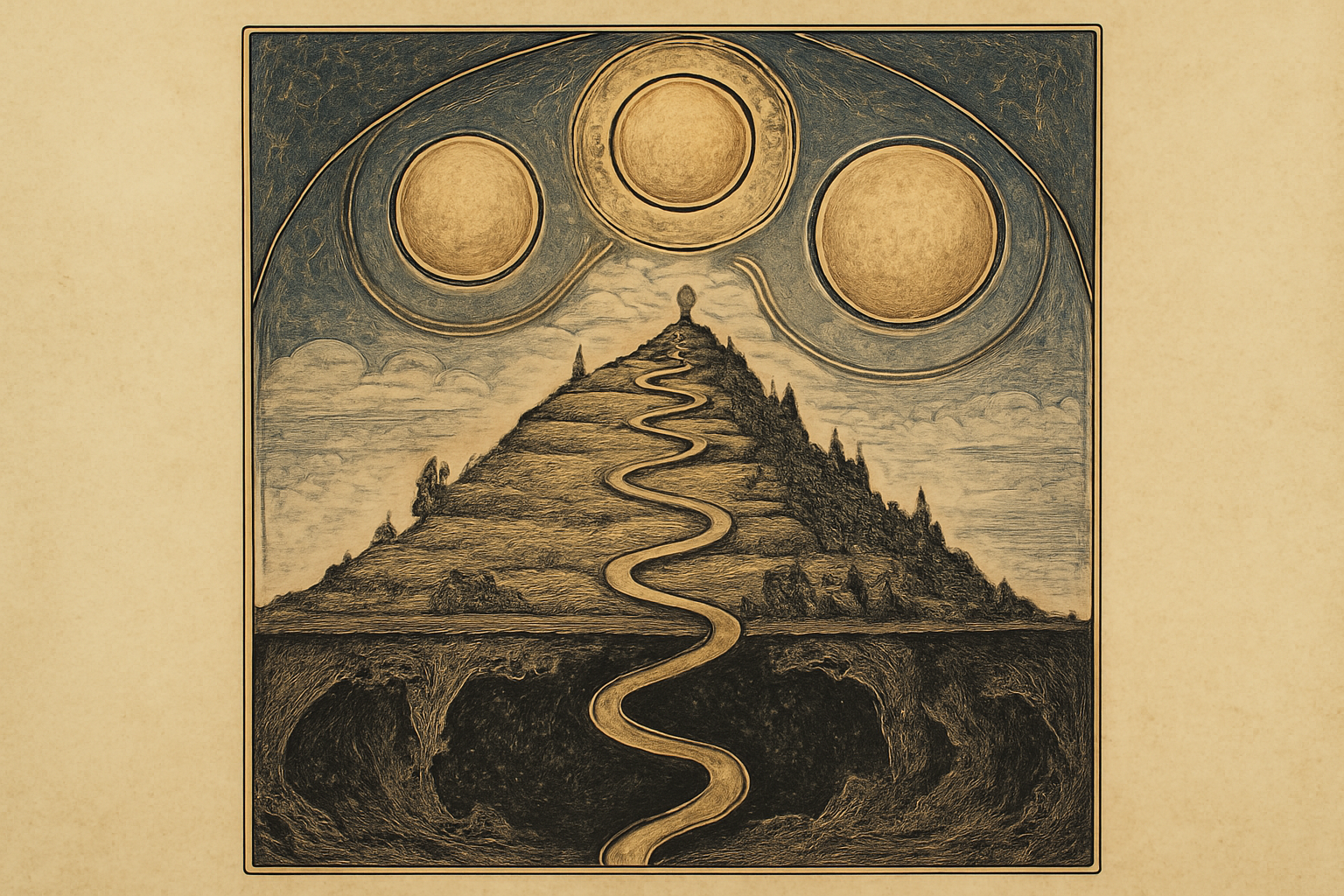
On Earth’s far side sits a mountain. When Lucifer fell, displaced earth rose opposite his impact point. That became Purgatory.
Seven terraces spiral upward, one for each deadly sin. Souls here burn, starve, and labor. But crucially—they will reach Heaven eventually.
In fact, Purgatory is the theology of hope. Pain here purifies. Suffering here means something. Distance from God decreases with each step upward.
At the summit waits the Earthly Paradise—Eden itself. Dante reunites with Beatrice there. Then the real ascent begins.
Paradise: The Celestial Spheres
Paradise isn’t one place. It’s nested spheres: the Moon, Mercury, Venus, the Sun, Mars, Jupiter, Saturn, the Fixed Stars, the Primum Mobile.
Above all sits the Empyrean—God’s throne, beyond space and time. Each sphere represents both a celestial body and a stage of virtue or beatitude.
That said, souls don’t truly dwell in these spheres. They appear there to teach Dante. Their actual home is the Empyrean, in God’s presence.
Geography Is Theology
This is the key insight: Dante didn’t separate map from meaning. The layout is the doctrine.
Hell descends. Purgatory ascends. Paradise radiates outward from God. Every location teaches you about sin, repentance, and grace through its position alone.
When you hold the geography in your mind, you hold the entire theology. Distance from God isn’t just distance—it’s everything.
About This Article

Written by Lucy Bamboo. Lucy Bamboo has been reading the Divine Comedy for fifteen years — first in translation, then stubbornly in Medieval Tuscan with a dictionary and far too many footnotes. Reading Dante is her scene-by-scene walk through the poem: the original Italian, seven centuries of scholarly argument presented as argument rather than answer, and the human questions sitting underneath the theology. More about this site.
Verify this against a primary source
Specifics change, and your situation may differ from the one described here. These are the authorities worth checking directly:
- Digital Dante, Columbia University — text, commentary and translation apparatus
- Princeton Dante Project — the Commedia with historical commentary
- Dartmouth Dante Project — searchable commentary from 1322 onward