Lucy Bamboo explores Canto X’s greatest marvel: a political enemy rendered with unmistakable admiration, rising from his tomb in Hell as if the place itself were beneath him.
The Heretic in His Tomb
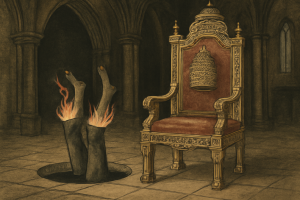
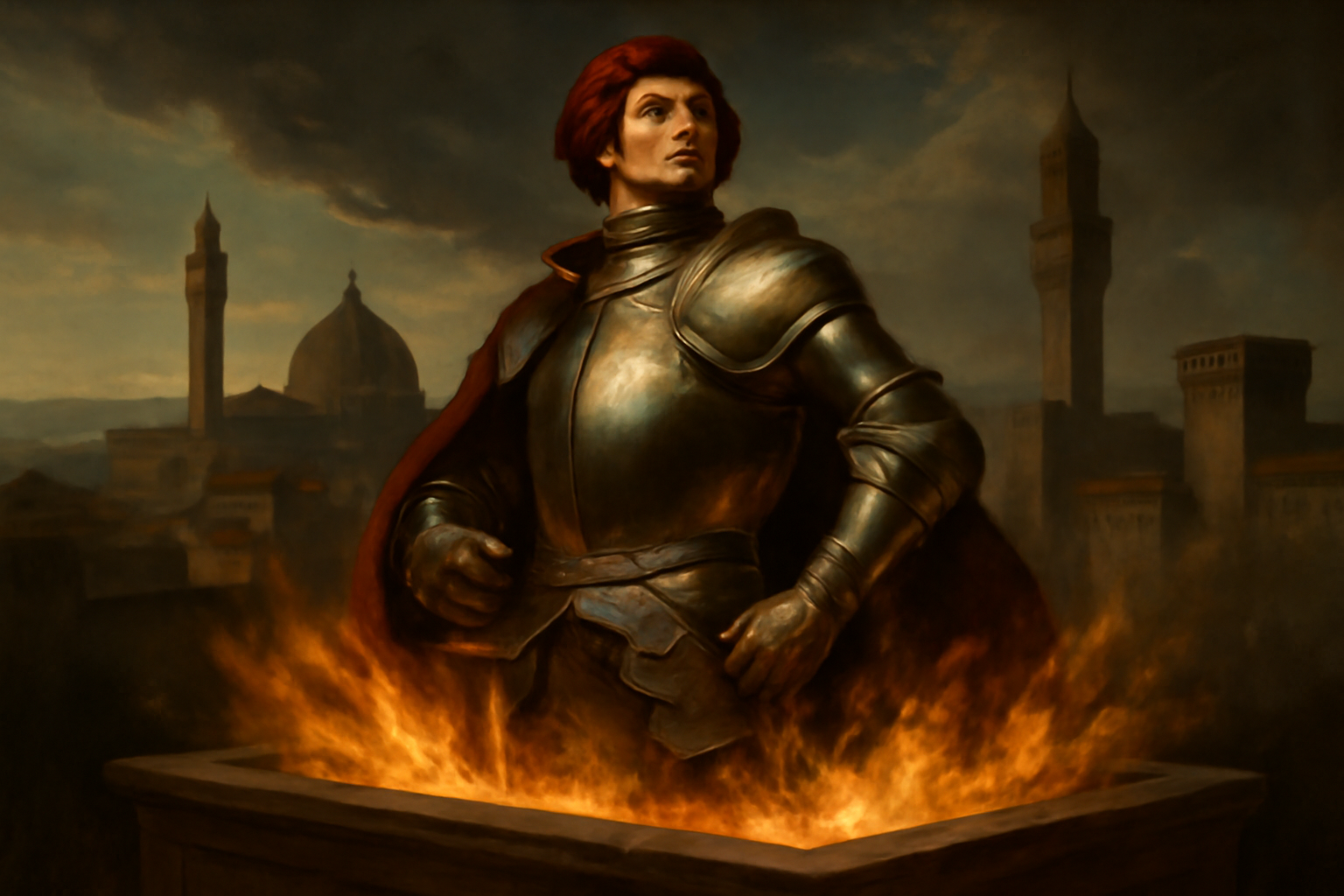
Dante descends into the sixth circle of Hell—the circle of heresy—and encounters something unforgettable. Flaming open tombs stretch across a landscape of fire. From one of them, a figure rises “from the waist up,” as if Hell itself offended his dignity. Farinata degli Uberti appears com’ avesse l’Inferno a gran dispitto: as if he held Hell in great contempt.
This is Dante’s dramatic genius at its peak. We are not told Farinata despises his punishment. We see it in his posture. His very body language becomes an argument against damnation.
Yet here is the paradox: Farinata was Dante’s political enemy. A Ghibelline leader of Florence, he crushed the Guelphs at Montaperti in 1260—a disaster that nearly destroyed everything Dante’s faction stood for. Why does Dante grant him such nobility?
The Man Behind the Heresy
Farinata’s damnation has nothing to do with factional politics. He burns in Hell for heresy—specifically Epicureanism, the denial of the soul’s immortality. This distinction matters enormously. Dante separates moral judgment from political judgment.
In life, Farinata had been something more complex than a mere warlord. After his military victory at Montaperti, other Ghibellines demanded that Florence be razed entirely. Farinata alone defended the city. His own side wanted to destroy it; he refused. In that moment, civic patriotism outweighed factional loyalty.
This is the Farinata Dante remembers. Not the conqueror, but the man who saved Florence from annihilation by his own allies. A heretic, yes—but a heretic with honor.
The Politics of Pride
When Farinata and Dante speak, they trade political barbs. The conversation turns on Florentine history—Montaperti, exiles, factional wounds. Yet something remarkable happens. Farinata cares more about Florence’s fate than his own damnation. He asks Dante about the city’s future with the intensity of a man whose love for his homeland survives even Hell.
Then Cavalcante de’ Cavalcanti interrupts—the father of Dante’s friend Guido, rising from the same tomb. His question is painfully human: “Is my son alive?” The dramatic shift is devastating. Political grandeur collapses into paternal anguish.
A Translator’s Challenge
Translating Farinata requires capturing something delicate: aristocratic defiance without melodrama. His pride is real. His contempt for Hell is real. Yet he is damned. A great translation must hold both truths simultaneously—the dignity and the doom.
This is where Dante’s genius resides. He makes us love what he condemns. We see Farinata’s nobility even as we understand his damnation. Few scenes in literature achieve this balance so completely.