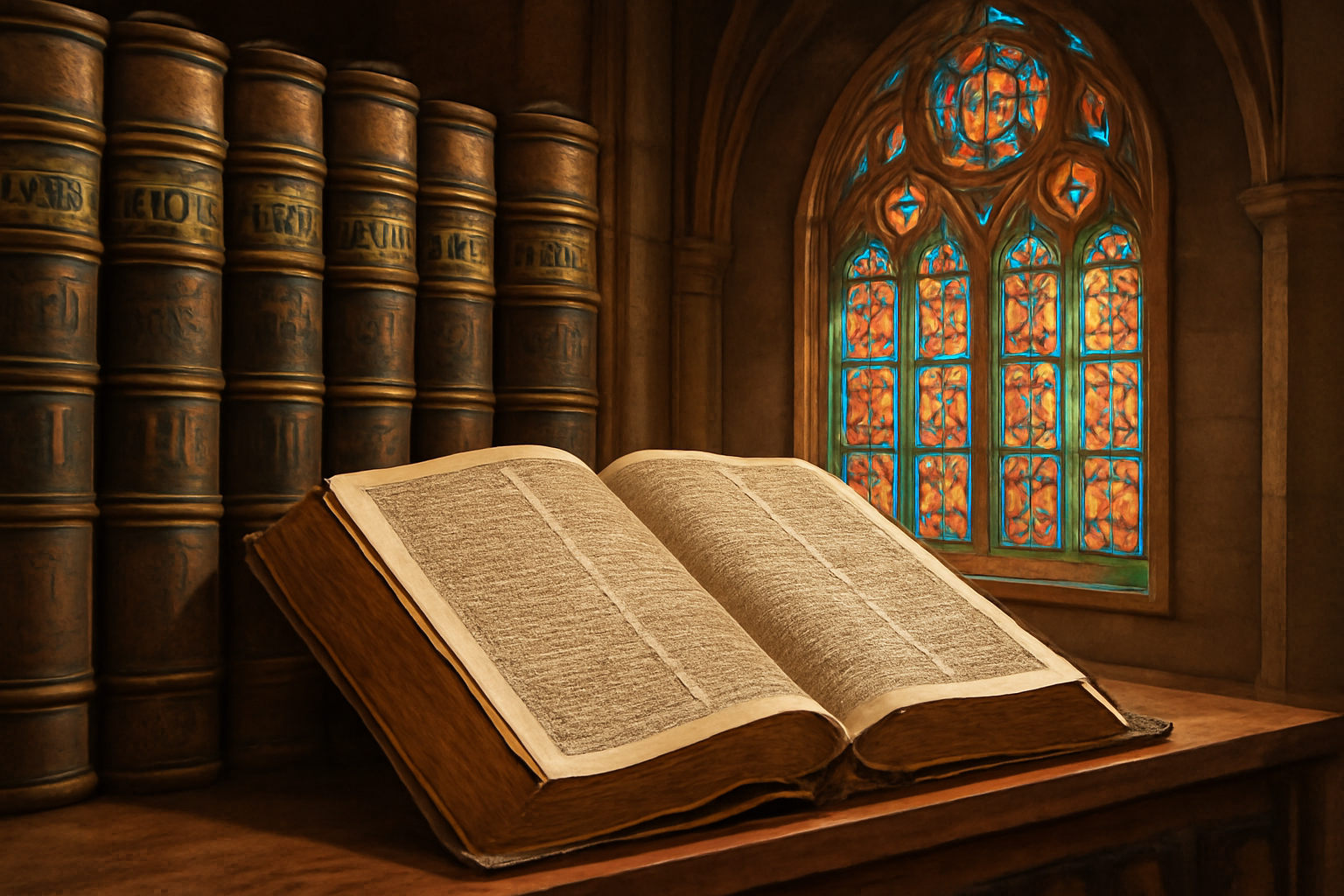
Dante’s Comedy is a theological poem. You can enjoy it without understanding the theology, but you’ll miss the architecture. The 1913 Catholic Encyclopedia — free, public domain, available at newadvent.org — is the single best tool for filling those gaps.
I discovered this by accident. While reading Paradiso, I hit a footnote about the Beatific Vision. My translation’s note was two sentences. Frustration led me to search the encyclopedia, and suddenly an entire philosophical structure clicked into place. That moment changed how I read Dante.
Why This Edition, Specifically
The 1913 Catholic Encyclopedia has three crucial advantages. First, it’s fully public domain in the US — published before 1928. Access costs nothing.
Second, its contributors wrote while still embedded in Scholastic philosophy. They weren’t translating medieval thought into contemporary language. They lived that intellectual tradition. Their explanations assume Aquinas, Bonaventure, and Peter Lombard matter — because Dante assumes this too.
Third, it hasn’t been updated with modern theology. That’s actually an advantage. You’re reading explanations of medieval Catholic teaching as understood by early 20th-century scholars, not as reinterpreted by contemporary ones. For Dante scholarship, this directness is invaluable.
What It Teaches You
Thomistic philosophy dominates Paradiso. Dante places Thomas Aquinas himself in heaven’s celestial rose. The encyclopedia’s article on Aquinas explains his Summa Theologica with clarity. Concepts like the Beatific Vision, the hierarchy of angels, and the nature of grace — all essential to Paradiso — suddenly have solid grounding.
When Dante places heretics in Hell, he’s condemning specific theological errors. The encyclopedia identifies each heresy and explains why the medieval Church rejected it. Reading about Arianism or Pelagianism before encountering those souls transforms a punishment into an argument.
Paradiso overflows with saints and theologians: Bonaventure, Albertus Magnus, Peter Lombard. The encyclopedia provides clear, focused biographies. You learn who they were and why Dante honored them. Context makes characters vivid.
For Purgatorio, articles on sacramental theology — penance, confession, purgation itself — explain the entire spiritual structure of that canticle. Medieval Catholic practice becomes visible beneath the poetry.
How to Use It
Keep newadvent.org open while reading. When a translator’s footnote mentions a theological concept, search the encyclopedia. Most articles are thorough yet readable. They’re written for educated laypeople, not specialists.
Don’t read entire entries cover-to-cover. Skim to the section you need. The encyclopedia rewards targeted searches more than sequential reading.
One Honest Caveat
The 1913 edition reflects early 20th-century Catholic apologetics. Some articles carry polemical edges. Read for information, not editorial stance. That said, the factual content — theological definitions, historical accounts, philosophical explanations — holds up remarkably well.
Dante’s poem rewards patient study. The Catholic Encyclopedia makes that study possible, clear, and free.