Here’s a secret about Dante’s Commedia: half the people he torments in Hell or praises in Paradise are there because of a political war most English readers have never heard of. Understanding Guelphs versus Ghibellines unlocks dozens of passages that otherwise feel baffling. This wasn’t ancient history to Dante—it was his life. It destroyed his life. And it’s the emotional core of his masterpiece.
Two Factions, One City
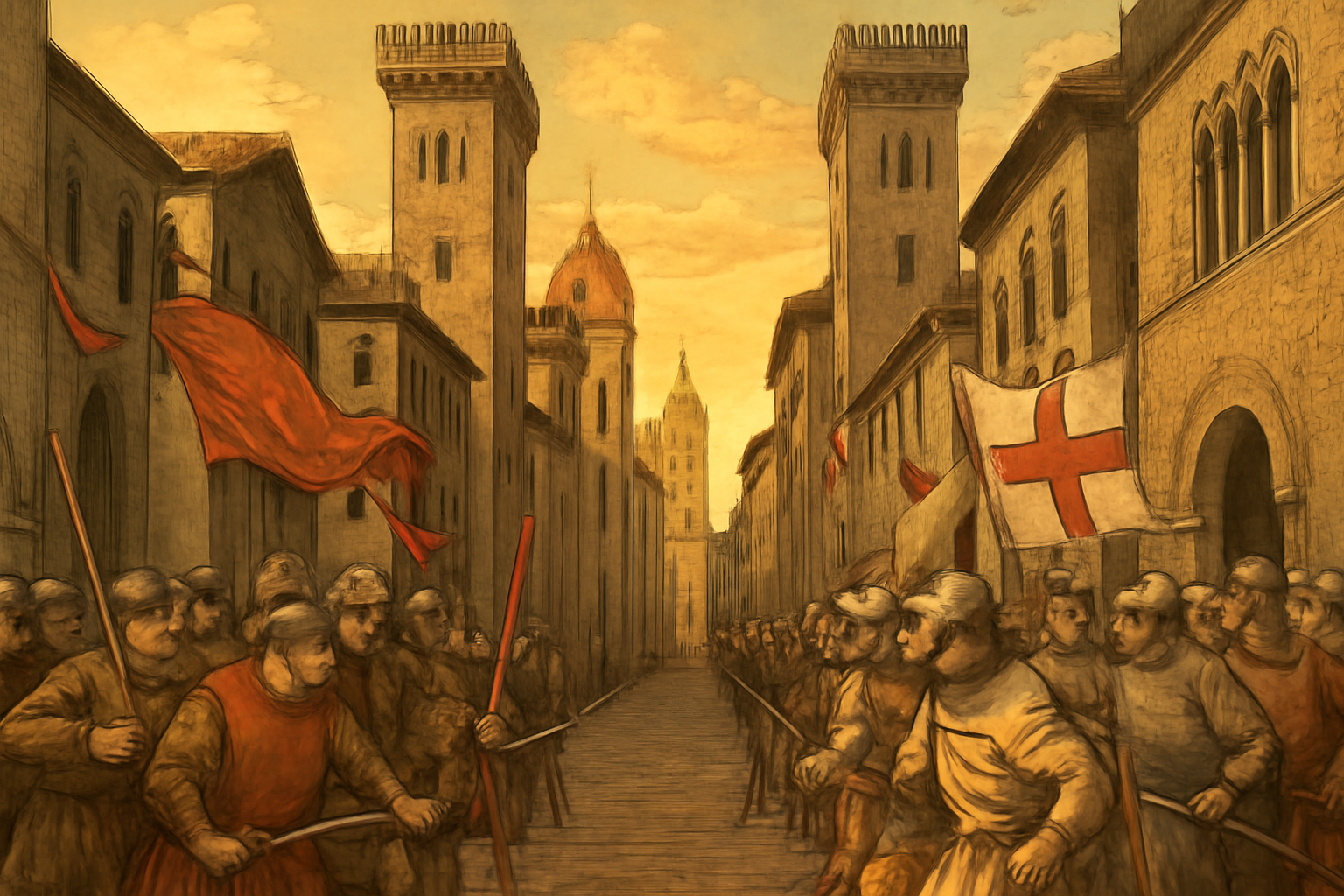
In medieval Italy, two rival power blocs fought for control of cities and territory. The Guelphs supported the Pope’s political authority. Ghibellines backed the Holy Roman Emperor. Neither side cared much about theology—both were Catholic. This was about power: who rules? Who taxes? Who makes the laws?
Florence was solidly Guelph. But by the 1290s, a dangerous split emerged within the faction itself. The Black Guelphs were hardline papal allies, willing to use violence to maintain dominance. The White Guelphs wanted papal support but also Florentine independence from outside interference. They preferred compromise.
Dante was a White Guelph. In 1300, he served as a city magistrate. By 1302, his faction had lost a violent power struggle. The Blacks exiled him from Florence. He never returned. He spent the remaining years of his life wandering Italian courts, poor, stateless, and bitter.
Why Dante’s Exile Matters for Reading the Commedia
Exile isn’t background information. It’s the engine driving the entire poem. Dante’s rage, his longing for Florence, his obsession with corruption and betrayal—these emerge directly from political catastrophe. When you recognize the names in the poem’s circles, suddenly his choices make sense.
Take Farinata degli Uberti, a Ghibelline military hero whom Dante places in Hell’s circle of Heresy. Or Brunetto Latini, Dante’s beloved mentor, whom he condemns to the violent seventh circle. Even Corso Donati, a Black Guelph leader responsible for Dante’s exile, appears condemned. The topography of the Commedia is a map of Florentine faction warfare.
What’s remarkable: Dante condemns corrupt members of all parties, including his own Whites. He transcends faction loyalty. His standard is moral principle, not tribal allegiance.
Where to Learn More (Free Resources)
- Wikipedia. Articles on “Guelphs and Ghibellines,” “History of Florence,” and “Dante’s Exile” are well-researched and CC-licensed.
- 1911 Encyclopaedia Britannica. Public domain. Excellently detailed on Florentine factional politics.
- Stanford Encyclopedia of Philosophy. Open-access article on Dante’s political thought.
- JSTOR Daily. Free open-access essays on medieval Florentine politics.
Once you know these names and factions, reading Dante becomes a richer experience. The Commedia stops being abstract allegory. It becomes personal testimony from a man who lost everything to political hatred—and who spent his exile transforming that bitterness into art.