Dantes Archaic Verbs: A Quick Guide to Medieval Tuscan Verb Forms

Dantes Archaic Verbs: A Quick Guide to Medieval Tuscan Verb Forms

When I first opened the Commedia, I thought my Italian was broken. Every third page threw unfamiliar verb forms at me—past tenses that didn’t match my textbook, contractions I’d never seen, conjugations that looked almost right but weren’t. I started keeping a list. Then I realized: these weren’t mistakes or dialect quirks. They were standard … Read more

Ogne, Etterno, Ne La: Spelling Differences Between Dantes Italian and Modern Italian

Ogne, Etterno, Ne La: Spelling Differences Between Dantes Italian and Modern Italian

When I first opened the Divine Comedy, the spelling stopped me cold. Words I recognized suddenly looked foreign. “Ogne” instead of “ogni.” “Etterno” stretched across the page. Once I learned to see these patterns, though, the text opened up. What seemed like chaos was actually consistent medieval Tuscan orthography—14th-century Florentine, to be precise. These aren’t … Read more

Words Dante Used That Modern Italian Lost: A Medieval Tuscan Vocabulary Guide

Words Dante Used That Modern Italian Lost: A Medieval Tuscan Vocabulary Guide

I learned the hard way that a modern Italian dictionary won’t help with half of Dante’s vocabulary. When I first tackled the Divine Comedy, I’d look up a word, find nothing, panic, then discover it was perfectly common in 14th-century Tuscany. That gap between medieval Italian and modern Italian is where reading Dante gets tricky—and … Read more

A Pocket Guide to Dantes Pronouns: Tu, Voi, and the Politics of Address

A Pocket Guide to Dantes Pronouns: Tu, Voi, and the Politics of Address

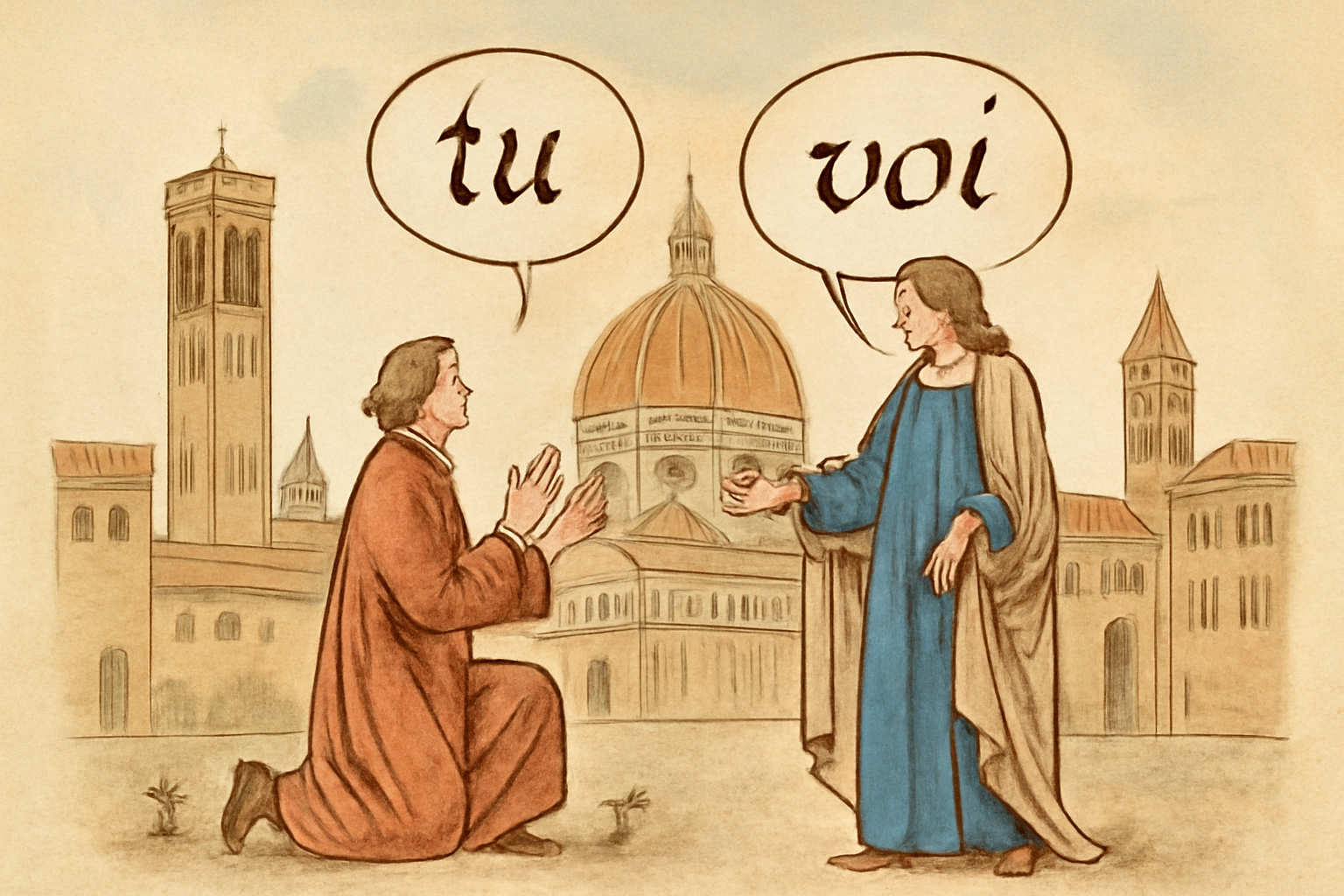
I didn’t realize how much drama was hidden in Dante’s pronoun choices until someone pointed it out. Now I can’t un-see it. Every time I reread the Commedia, I catch myself watching for those tiny Italian words—tu and voi—like they’re secret messages written in plain sight. And honestly? They are. In medieval Tuscan Italian, the … Read more