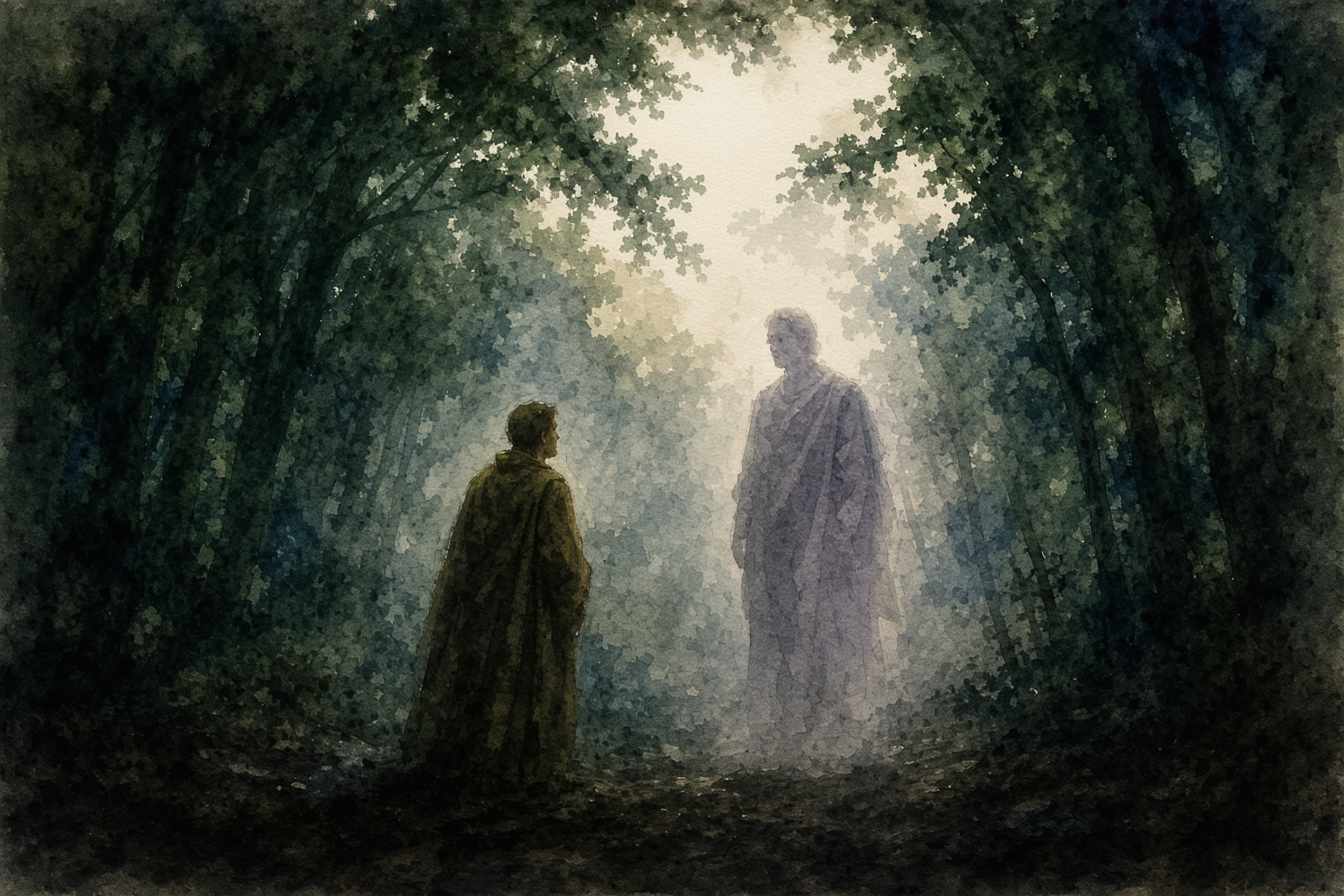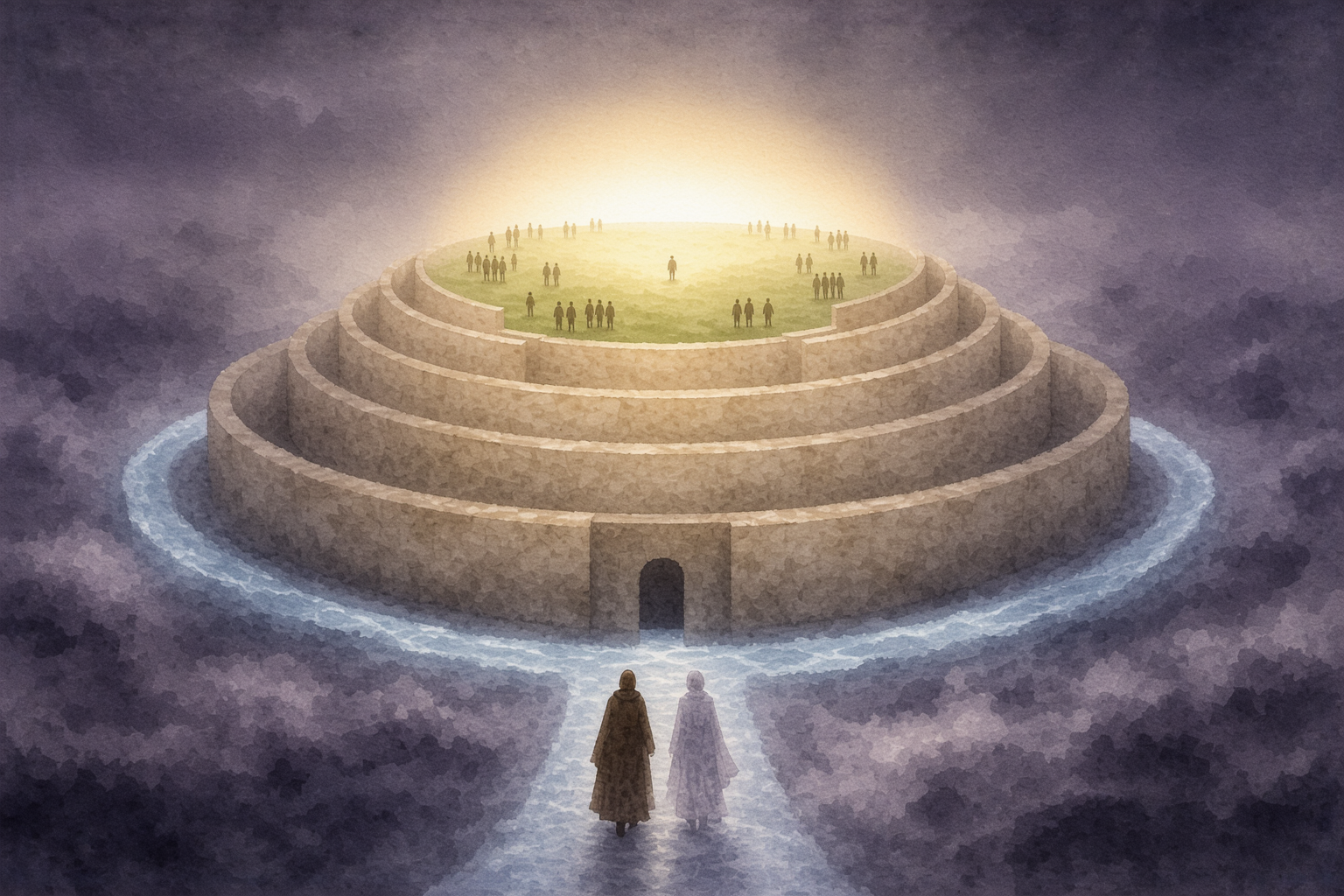
The Indifferent — Inferno, Canto 3

The Indifferent  Inferno 3

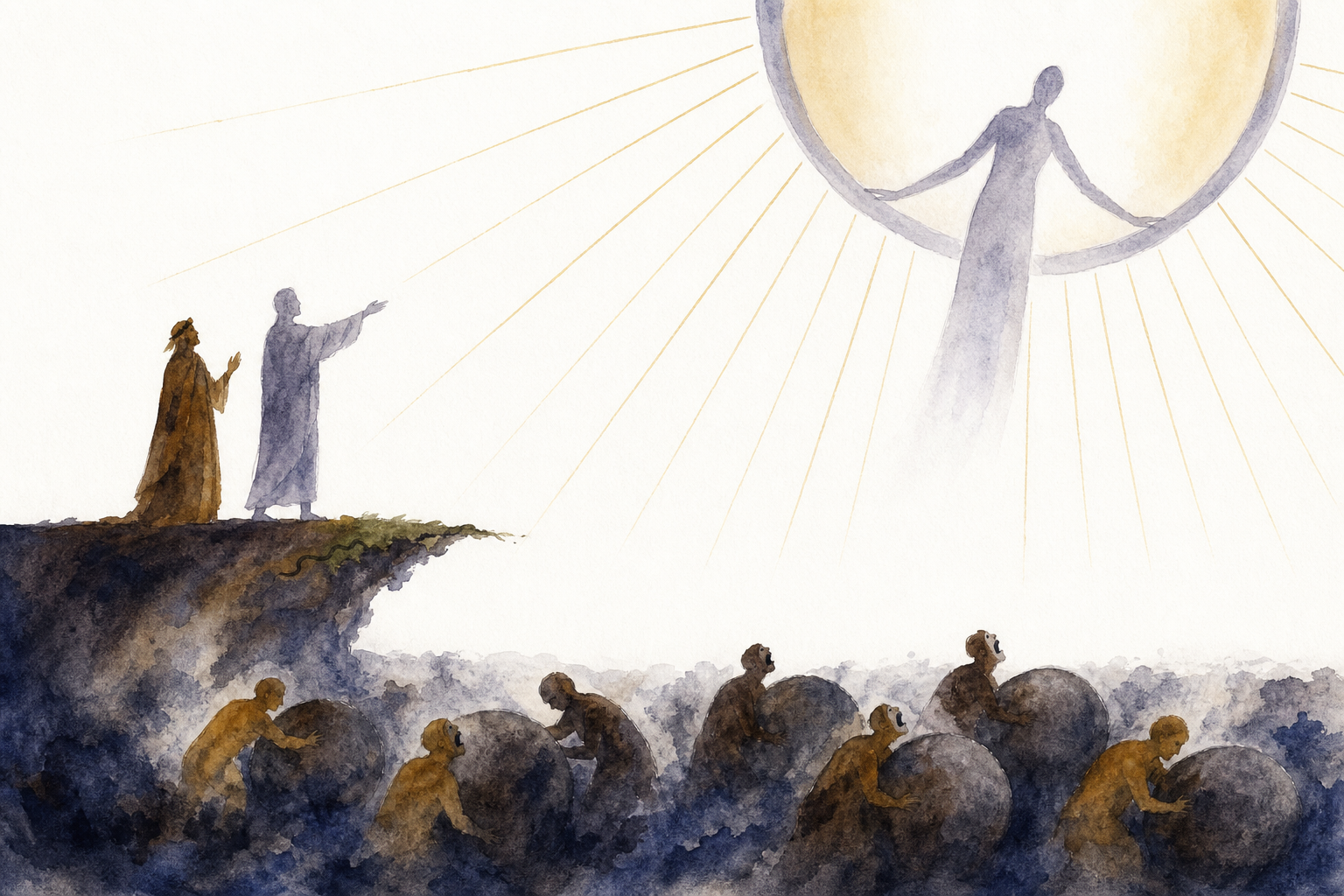
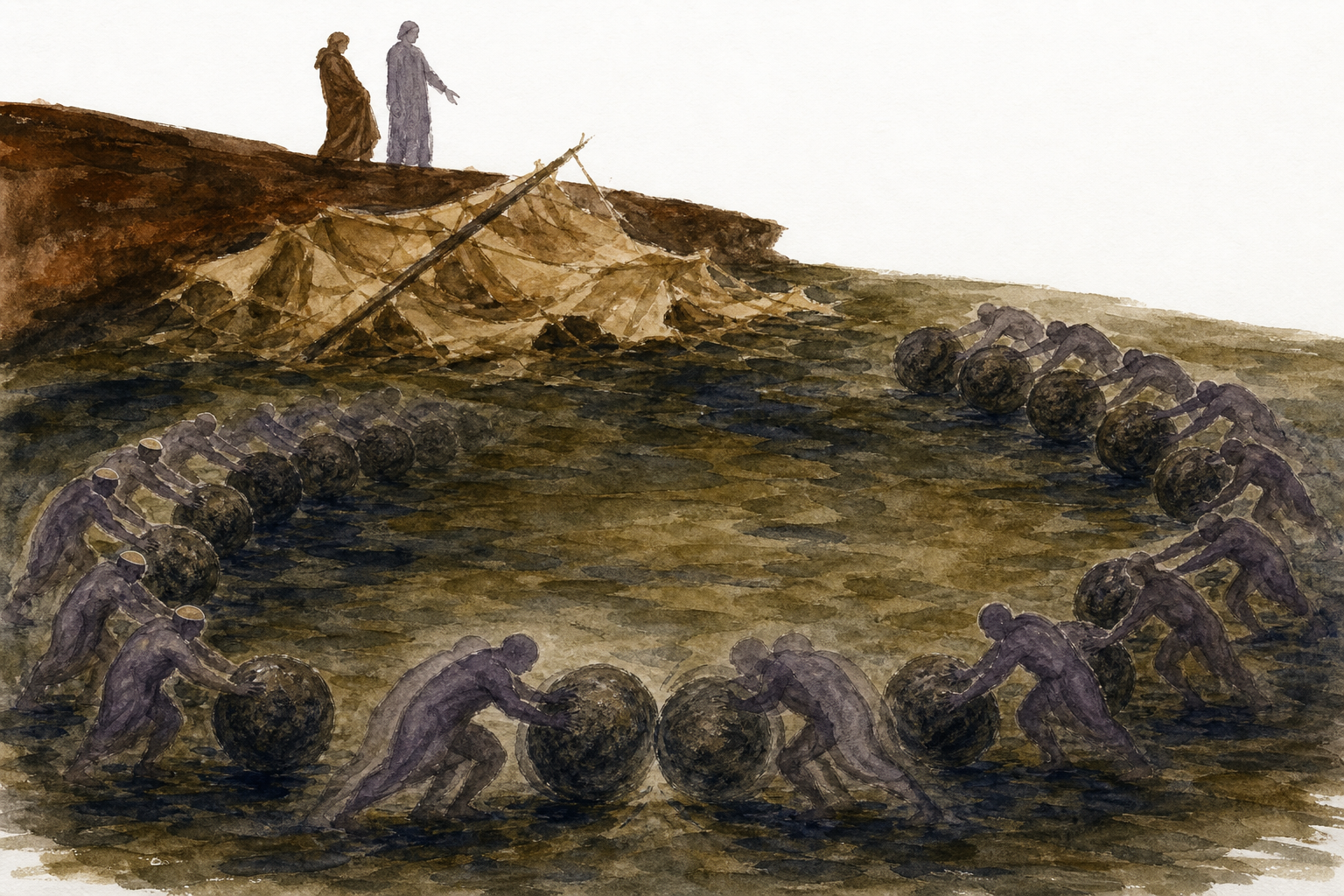
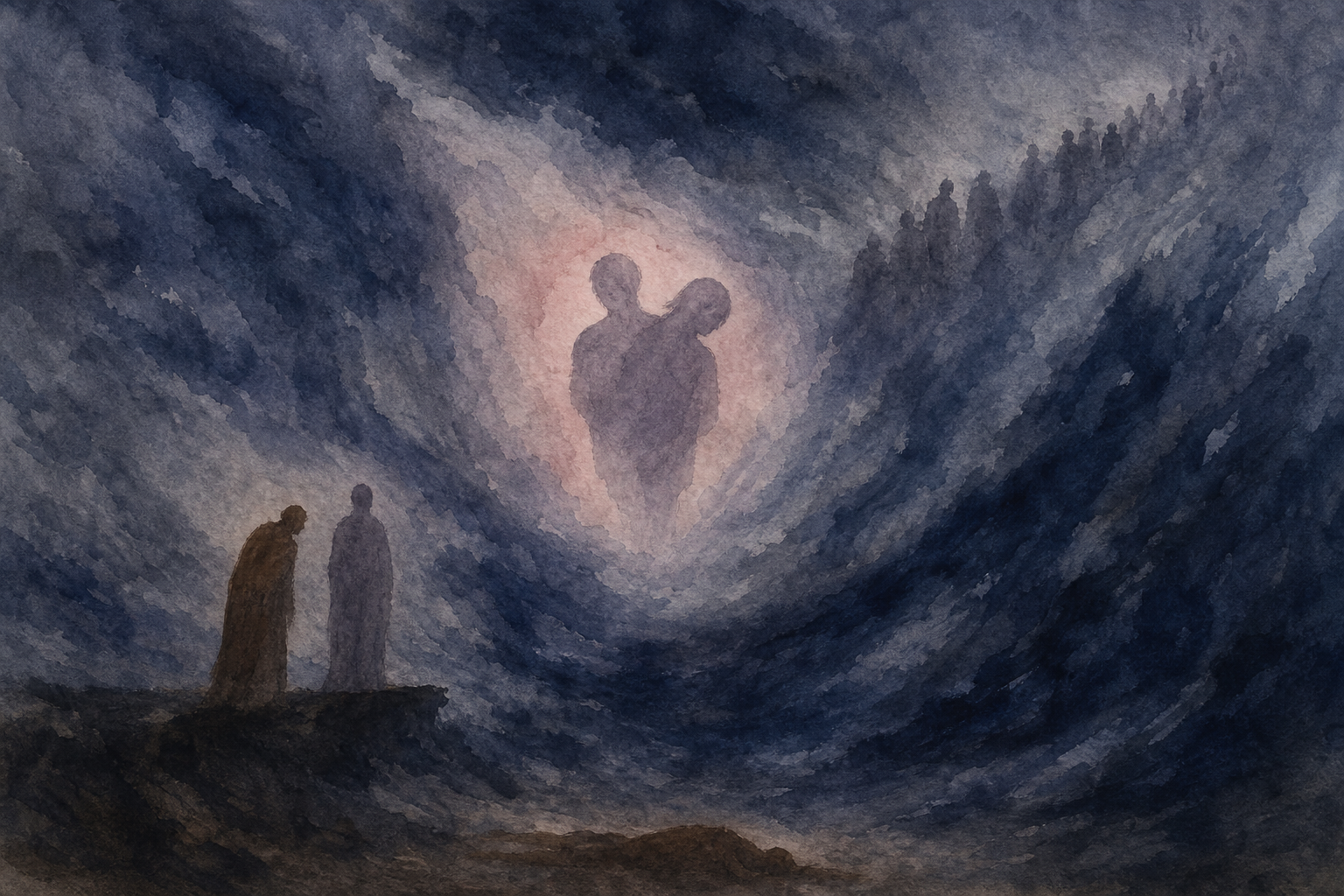
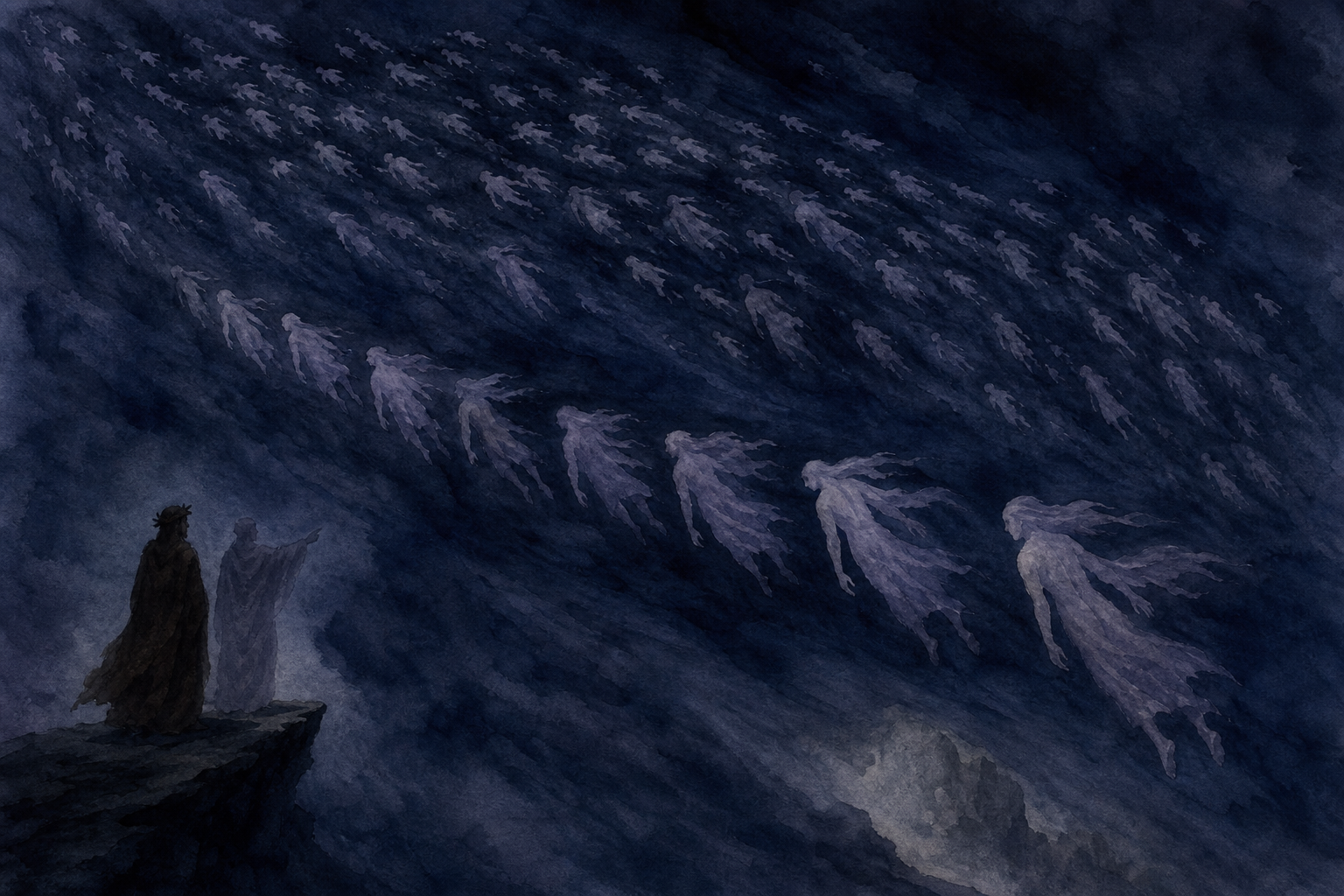
Before Hell proper begins, Dante has to walk through a crowd that belongs to neither Heaven nor Hell — and the first soul he recognizes there, he refuses to name. Inferno · Canto 3 · Lines 31–69 · Scene 8 DIVINE COMEDY · SCENE 8InfernoCanto 3 of 34PurgatorioParadiso Prompt: Watercolor on white paper. A vast, … Read more

The Three Beasts — Inferno, Canto 1

The Three Beasts  Inferno 1

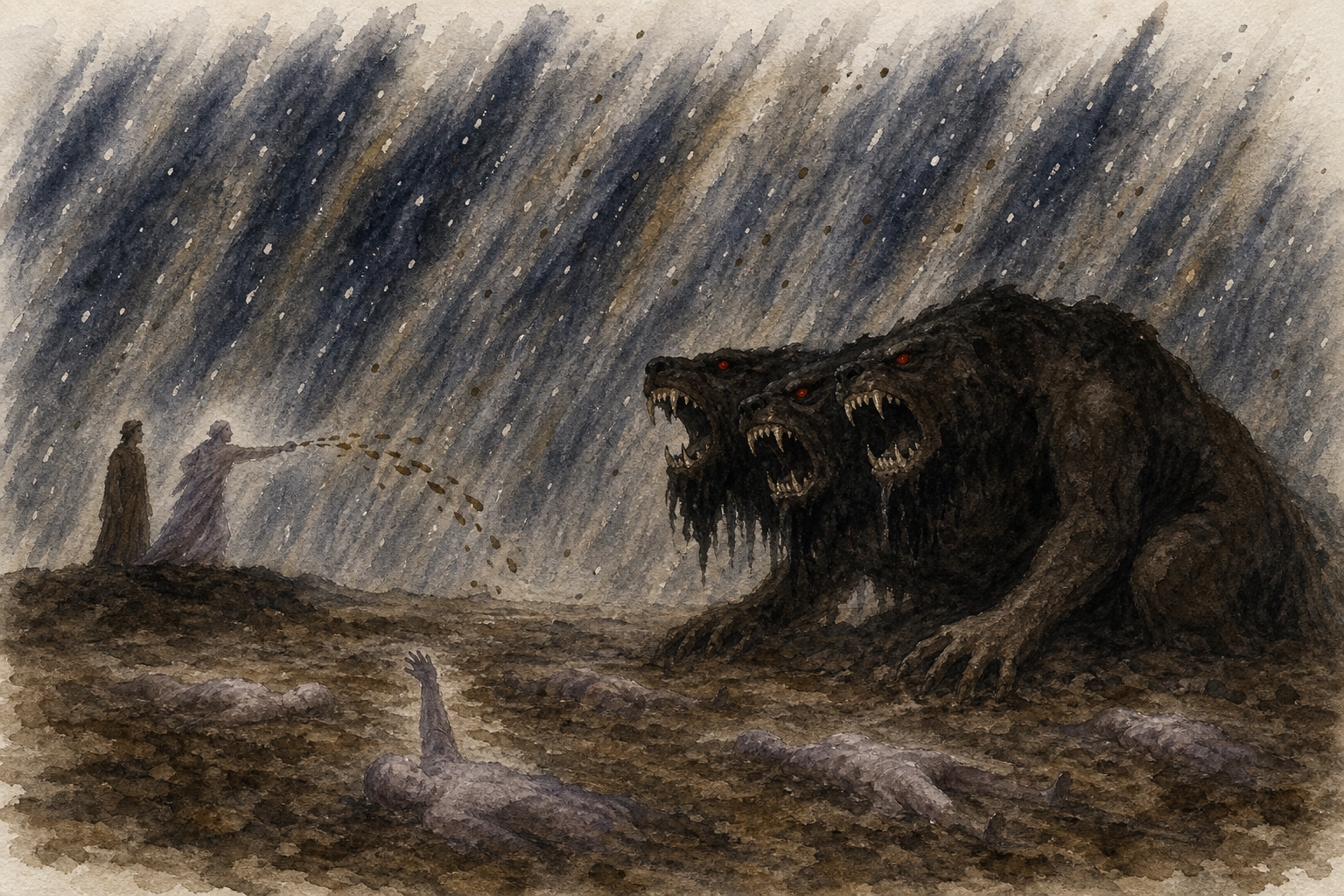
The hill is visible, and for a moment the path seems clear. Then the beasts appear. A spotted cat — the lonza, whose Italian name has no certain English equivalent — blocks the way first. A lion follows. The she-wolf comes last and is the worst: she fills Dante with such dread that he loses … Read more

The Gate of Hell — Inferno, Canto 3

The Gate of Hell  Inferno 3

The gate speaks first. Nine lines of self-description in the first person — built by Power, Wisdom, and Primal Love — end with the instruction to abandon all hope. Dante reads them and tells Virgil they are hard. Virgil’s reply is the opposite of hard: here you must leave all hesitation behind. That the entrance … Read more

The New Resolve — Inferno, Canto 2

The New Resolve  Inferno 2

Canto 2 is the poem’s first crisis of nerve. Dante has agreed to go; lines 10–42 record his immediate reversal. Lines 109–142 record the recovery — Virgil finishes his account of Beatrice’s mission, presses Dante with three rapid questions, and something shifts. The flower simile at line 127 is where the passage becomes genuinely difficult: … Read more

Beatrice in Limbo — Inferno, Canto 2

Beatrice in Limbo  Inferno 2

Virgil’s account of why he came to the dark wood takes up most of this passage, organized around a chain of mercy working downward from Heaven: an unnamed noble lady was moved to grief, sent Lucy, who went to Beatrice, who crossed from her place beside Rachel in Heaven to find Virgil and ask him … Read more

Dante’s Doubt — Inferno II

Dantes Doubt  Inferno 2

Canto 2 opens at nightfall — all creatures at rest, Dante alone still burdened — and immediately retracts the assent given at the end of Canto 1. He agreed to follow Virgil. Now he needs to know why he specifically should make this journey. Two precedents exist: Aeneas descended to serve the founding of Rome, … Read more